
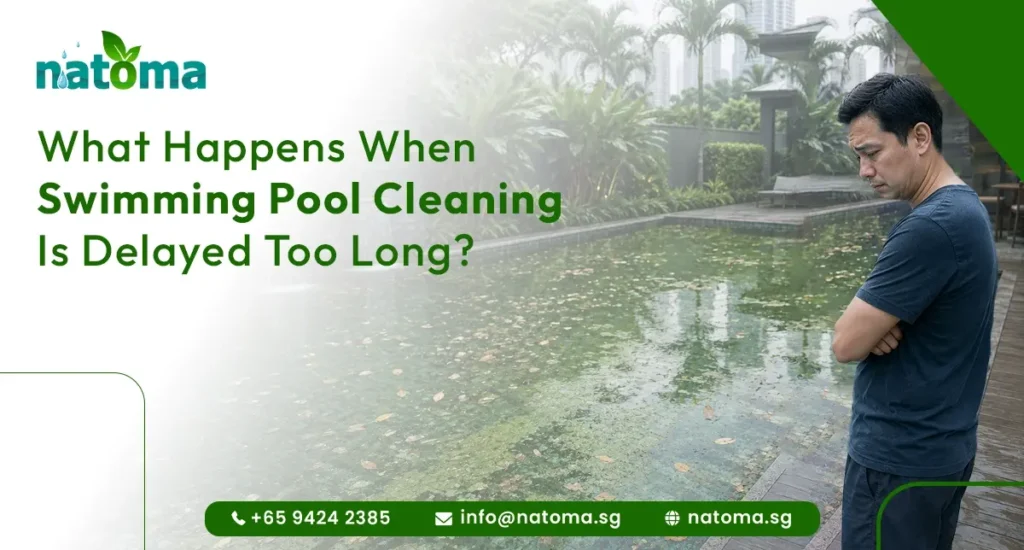
A swimming pool may look clean on the surface, but water quality can change quickly when proper maintenance is delayed. Whether the pool is used by residents, guests, visitors, or employees, regular Swimming Pool Cleaning is essential to maintaining water clarity, hygiene standards, equipment performance, and user safety.
Many facilities postpone Pool Maintenance when the water still appears acceptable. However, pool-related issues often begin long before visible signs appear. Small maintenance delays can lead to algae growth, water imbalance, filtration problems, unpleasant odors, and costly corrective treatments.
Regular swimming pool cleaning prevents hidden water issues, keeping pools safe, clear, and cost-efficient year-round.
Clean water is not achieved by appearance alone. It requires ongoing monitoring, professional cleaning procedures, and preventive maintenance.
Swimming Pool Cleaning : The First Signs Are Often Easy to Miss
When swimming pool maintenance is delayed, the earliest warning signs are usually subtle.
Facility managers may notice:
Water becoming slightly cloudy
Pool surfaces feeling slippery
Small debris collecting around corners
Reduced water circulation
Minor staining around tiles
Because these changes develop gradually, many people underestimate the importance of immediate action.
Unfortunately, small issues rarely stay small for long.
Water Quality Begins to Decline
Pool water requires continuous balance between filtration, circulation, and treatment processes.
When cleaning schedules are delayed:
Organic contaminants increase
Fine particles remain suspended
Water clarity decreases
Bacteria growth becomes more likely
Chemical balance becomes harder to maintain
Professional swimming pool cleaning helps prevent these issues before they become visible to users.
A well-maintained pool supports both user confidence and operational efficiency.
Algae Growth Can Escalate Quickly
One of the most common consequences of delayed pool cleaning is algae formation.
Algae thrive when:
Water circulation is poor
Cleaning frequency decreases
Chemical balance becomes inconsistent
Organic matter accumulates
What starts as a small patch can quickly spread across pool walls, floors, and water surfaces.
Beyond appearance, algae can create slippery conditions and increase cleaning costs significantly.
This is why preventive pool cleaning services are usually more effective and economical than reactive treatments.
Pool Equipment Faces Additional Stress
Swimming pool systems rely on proper maintenance to operate efficiently.
When cleaning is postponed, filters and circulation systems must work harder to manage contaminants.
This can result in:
Reduced filtration efficiency
Increased energy consumption
Shorter equipment lifespan
More frequent maintenance requirements
Higher operational costs
Regular swimming pool maintenance helps protect both water quality and facility infrastructure.
User Experience Starts to Decline
People expect swimming pools to feel clean, fresh, and inviting.
Delayed maintenance often affects:
Water clarity
Visual appearance
Pool surroundings
User confidence
Overall facility reputation
Even minor cleanliness issues can influence how visitors perceive an entire property or facility.
For many organizations, maintaining a clean swimming pool supports broader goals related to customer satisfaction and facility presentation.
Surrounding Areas Need Attention Too
Poolside areas frequently collect:
-
Dirt
-
Leaves
-
Dust
-
Water stains
-
Foot traffic residue
When these areas are overlooked, the pool environment can appear neglected even if the water remains acceptable.
Professional pool cleaning programs often include attention to:
-
Pool decks
-
Walkways
-
Drainage points
-
Seating areas
-
Safety zones
The Cost of Delayed Cleaning Is Usually Higher
Many facilities postpone cleaning to reduce short-term expenses.
However, delayed maintenance often leads to:
Intensive corrective cleaning
Additional chemical treatment
Equipment servicing
Water replacement costs
Operational disruptions
Preventive Professional Swimming Pool Cleaning is generally far more cost-effective than addressing major problems after they develop.
Consistent maintenance protects both budgets and facility standards.
Why Preventive Maintenance Matters More Than Emergency Cleaning
Emergency cleaning often occurs when visible problems become impossible to ignore.
By that stage:
Water quality may already be compromised
User complaints may increase.
Equipment performance may decline
Corrective actions become more expensive
Preventive pool maintenance focuses on avoiding these situations altogether.
A structured cleaning schedule helps maintain stability, consistency, and long-term pool performance.
How Natoma’s Professional Teams Support Consistent Swimming Pool Maintenance
Natoma Pool Cleaning Service understands that effective swimming pool cleaning requires more than occasional cleaning visits. Consistency, inspection, and preventive maintenance are essential for maintaining clean, safe, and visually appealing pool environments.
Natoma’s professional teams support facilities through:
Scheduled pool cleaning programs
Water surface and debris management
Poolside area cleaning
Routine maintenance support
Preventive cleaning procedures
Facility hygiene monitoring
Consistent operational scheduling
Rather than waiting for problems to appear, Natoma focuses on maintaining cleanliness proactively. This helps facilities preserve water quality, improve user confidence, and reduce the risk of costly corrective maintenance.
Facilities looking to maintain long-term standards often benefit from structured cleaning programs delivered by experienced cleaning professionals.
Clean Pools Support Better Facility Standards
Swimming pools are often among the most visible features within a facility.
When pools are maintained properly:
Water remains clearer
Equipment operates more efficiently
User satisfaction improves
Maintenance costs remain predictable
Facilities maintain stronger reputations
Consistent cleaning supports both operational performance and user experience
Conclusion
Delaying swimming pool cleaning may seem harmless at first, but the consequences can quickly affect water quality, equipment performance, safety standards, and overall facility presentation.
Regular swimming pool maintenance helps prevent algae growth, supports cleaner water, protects infrastructure, and creates a more enjoyable environment for users.
With structured maintenance schedules and professional cleaning support, facilities can avoid costly corrective actions and maintain higher operational standards year-round.
In the long run, consistent pool cleaning is not simply a maintenance task it is an investment in safety, facility performance, and user satisfaction.
Frequently Asked Questions
Most commercial and residential pools should be cleaned weekly to maintain water quality and safety.
Delayed cleaning can lead to algae growth, poor water quality, equipment damage, and health risks.
Yes. Contaminated water may contain bacteria and microorganisms that can cause infections and skin irritation.