
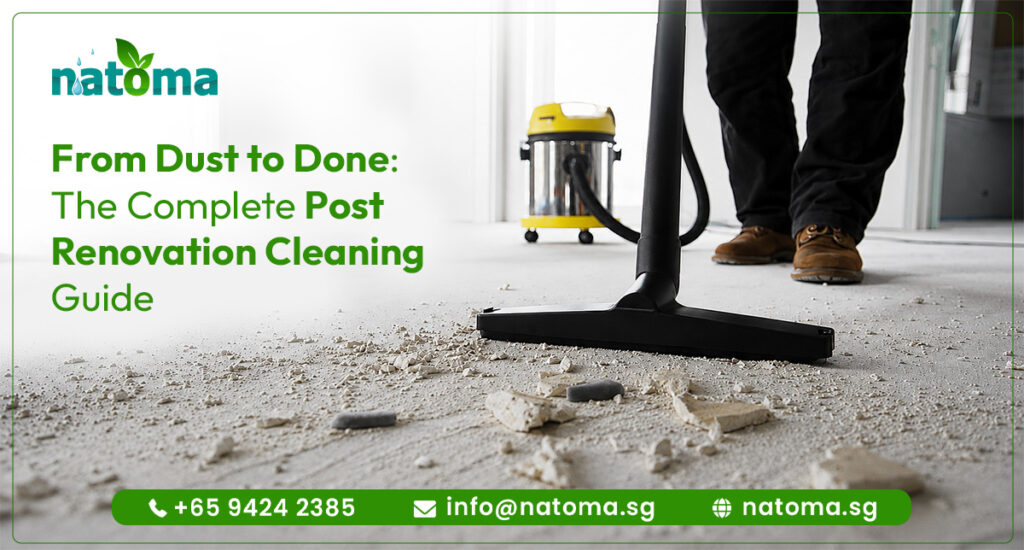
A newly renovated property can look impressive at first glance. Fresh flooring, new fixtures, painted walls and upgraded interiors can completely transform a space.
But look a little closer.
Fine renovation dust may still be sitting along skirting boards. Construction residue can remain on floors, while windows may have fingerprints, paint marks or renovation residue. Cabinets, corners and fittings can also collect particles from drilling, cutting and installation.
That is why the job is not truly finished when the renovation crew leaves.
A professional post-renovation cleaning service helps bridge the gap between “construction completed” and “space ready for use.” For property owners preparing a newly renovated home, office, retail unit or commercial facility, choosing the right Post Renovation Cleaning Company can make the final preparation more organised and thorough.
From removing fine construction dust to detailing floors, windows, fixtures and hard-to-reach areas, professional Post Renovation Cleaning gives the renovated space the final clean it needs before Move-in, Reopening or Handover.
When Is the Best Time to Book Post-Renovation Cleaning?
Timing your cleaning correctly can prevent unnecessary repeat work.
If drilling, painting or installation is still happening, cleaning too early may mean that new dust settles immediately afterwards.
A better sequence is generally:
Major Renovation Completed
↓
Loose Debris Cleared
↓
Installation Work Finished
↓
Post-Renovation Cleaning
↓
Final Inspection
↓
Move-In / Business Opening / Handover
For larger commercial projects, cleaning may be coordinated in stages depending on the construction and handover schedule.
What Happens to a Property During Renovation?
Renovation creates more than visible construction waste.
Different activities introduce different types of residue into the property:
Drilling and cutting → Fine dust
Painting → Splashes and marks
Tiling → Grout and installation residue
Carpentry → Wood particles
Electrical work → Dust around fittings and fixtures
Material installation → Packaging and debris
These particles can spread beyond the immediate work area. Dust may settle on horizontal surfaces, enter cabinet interiors and collect in corners that are easily overlooked.
This is why Post Renovation Cleaning requires a more detailed approach than everyday housekeeping.
The Three-Stage Approach to a Proper Renovation Cleanup
Rather than approaching the entire property at once, a structured cleaning process can make the work more effective.
Stage 1: Clear the Remaining Mess
Large pieces of unwanted material should be removed before detailed cleaning begins.
This may include packaging, protective coverings, loose materials and smaller renovation debris.
Once these obstacles are cleared, cleaners can access the actual surfaces that need attention.
Stage 2: Work From High Areas to Low Areas
Dust naturally settles downward.
For that reason, professional cleaning teams generally work systematically from higher surfaces towards lower areas.
This can involve:
Ceiling-level fixtures
Light fittings
Upper shelves
Cabinets
Walls
Doors
Windows and frames
Furniture
Skirting
Floors
The objective is to avoid repeatedly cleaning the same area because dust has fallen from an untreated surface.
Stage 3: Detail Before Final Inspection
The final stage is where overlooked areas become important.
Corners, edges, tracks, handles, cabinet interiors and other detailed surfaces should be checked.
A final inspection can then identify areas that require another pass before the property is occupied or handed over.
Where Does Renovation Dust Hide?
The most noticeable dust is usually on the floor.
But floors are only one part of the property.
Behind and Inside Cabinets
Carpentry and installation work can leave fine particles inside drawers, shelves and storage compartments.
Window Tracks
Renovation dust can settle inside window tracks and along frames where ordinary wiping may not reach effectively.
Skirting and Corners
Edges around rooms can collect fine particles that are easy to miss during a quick cleanup.
Light Fixtures
Drilling, painting and ceiling work can leave dust around fittings and overhead surfaces.
Doors and Handles
These areas can pick up dust, fingerprints and marks during renovation activities and subsequent cleaning.
Bathroom Fixtures
Renovated bathrooms may require detailed attention to tiles, fittings, mirrors, floors and other surfaces.
A good renovation cleaning service therefore looks beyond the most obvious areas
Why Floor Cleaning Needs the Right Approach
Renovation can leave different types of residue on flooring.
Depending on the project, there may be:
Grout residue
Paint marks
Fine construction dust
Adhesive traces
Dirt from contractor movement
Packaging particles
The correct cleaning method depends on the flooring material.
Tiles, vinyl, marble, timber and concrete should not automatically be treated in the same way. Using an unsuitable product or technique can potentially damage a finished surface.
Professional floor cleaning services should therefore consider the floor type before selecting the cleaning method.
Windows Are Part of the Final Finish
Newly renovated interiors can lose some of their visual impact if the glass is covered with dust, fingerprints or renovation residue.
Windows and glass partitions may need attention after painting, carpentry, drilling and other activities.
A detailed window cleaning service can address accessible glass surfaces, frames and tracks according to the property’s requirements.
Clean windows also make it easier to appreciate the finished interior rather than looking through a layer of construction dust.
Different Properties Need Different Cleaning Plans
A Post-Renovation Cleaning Service should not follow exactly the same checklist for every property.
Residential Properties
Homes may require detailed cleaning of bedrooms, living areas, kitchens, bathrooms, wardrobes, windows, floors and balconies.
Offices
Office cleaning services Singapore requirements can include workstations, meeting rooms, glass partitions, flooring, reception areas and shared facilities.
Retail Spaces
Retail units may require cleaning before merchandise, staff and customers enter the premises.
Commercial Buildings
Larger properties may involve multiple floors, common areas, washrooms, corridors, lifts and other shared spaces.
Industrial Properties
Industrial renovation projects may require a different approach depending on the scale of work, floor type, equipment and site conditions.
The cleaning plan should reflect the actual condition and intended use of the property.
What Should You Look for in a Post-Renovation Cleaning Company?
Price should not be the only consideration when selecting a professional cleaning company Singapore property owners can rely on.
Look at the company’s:
Cleaning Experience – Does the team understand renovation-related cleaning challenges?
Scope of Service – Are floors, windows, cabinets, washrooms and detailed areas included where required?
Cleaning Methods – Does the team consider different surface materials?
Manpower Planning – Can the company handle the property’s size and cleaning schedule?
Communication – Is the scope clearly discussed before work begins?
Final Inspection – Is there a process for checking the completed work?
A clear scope and realistic expectations can help prevent misunderstandings during the final handover.
Natoma: Professional Support From Renovation to Ready
Natoma provides professional cleaning support for properties following renovation, refurbishment and construction-related work.
From residential spaces to offices, commercial properties and larger facilities, Natoma can tailor the cleaning scope according to the condition and requirements of the site.
The service can include detailed attention to:
Renovation dust
Floors and surface residue
Windows and glass
Cabinets and built-in areas
Kitchens
Washrooms
Doors and fixtures
Common areas
Final cleaning and preparation
For property owners and businesses preparing a renovated space for move-in, reopening or handover, having an organised cleaning process can make the final transition easier.
Natoma’s broader cleaning and facility support capabilities also allow cleaning requirements to be considered as part of the property’s ongoing maintenance needs rather than as an isolated task.
Conclusion: The Final Step That Completes the Renovation
A renovation transforms a property, but post-renovation cleaning brings the finished space together.
The final details matter—from fine dust on window frames and residue around fixtures to particles inside cabinets and marks on newly finished floors. These small areas can make a difference to the overall presentation of the property.
Choosing the right post-renovation cleaning service means having a professional team that understands how to handle renovation dust, construction residue and detailed finishing requirements.
Natoma — Quality Cleaning After Every Renovation
With Natoma’s Post-Renovation Cleaning Service, property owners can leave the final cleanup to a professional team. From dust removal and floor cleaning to window, fixture, cabinet and detailed surface cleaning, Natoma helps prepare renovated spaces for their next purpose.
Frequently Asked Questions
High-traffic areas such as entrances, restrooms, dining spaces, seating areas, and waste disposal stations should be prioritized in any event cleaning checklist. Regular cleaning of these zones helps maintain hygiene, enhance guest satisfaction, and ensure a safe event environment.
Schedule regular cleaning checks and place waste bins in convenient locations. A proactive event cleaning plan helps keep the venue tidy from start to finish.
To avoid last-minute cleaning problems, event organizers should implement a detailed event cleaning checklist, inspect the venue beforehand, and arrange adequate waste management solutions. Proper event cleaning planning ensures a smooth and hassle-free event experience.
Yes. An experienced event venue cleaning service such as Natoma can support venue preparation, live event operations, waste management, and complete post-event venue restoration through a single coordinated cleaning program.