
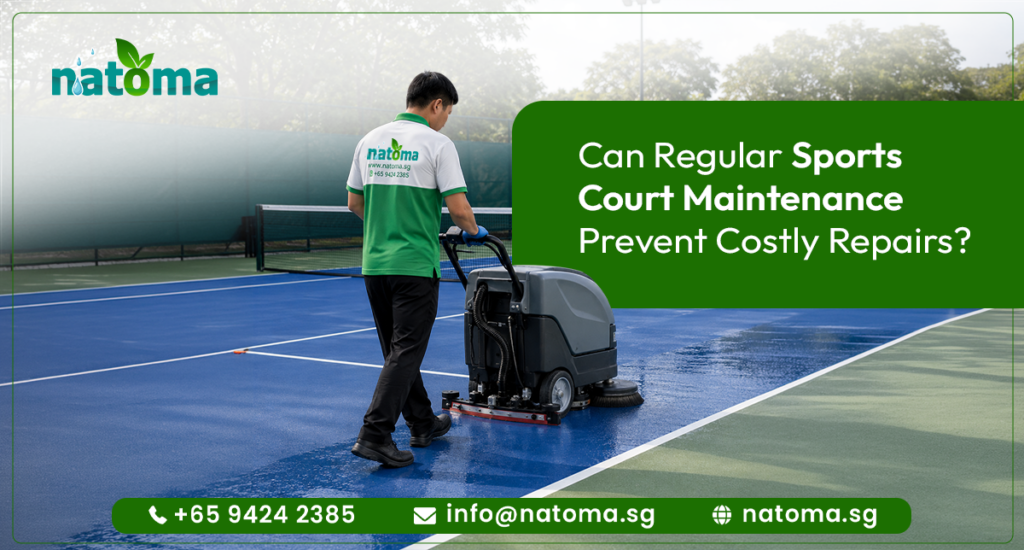
Many facility owners focus on sports court repairs only after visible damage appears. Unfortunately, by the time cracks, surface wear, drainage issues, moss growth, or artificial turf deterioration become obvious, repair costs are often significantly higher than routine maintenance expenses.
Whether it is a Tennis court, Padel court, Pickleball court, Basketball court, or Artificial turf facility, Regular Sports Court Maintenance plays a critical role in preserving performance, appearance, and long-term value.
Industry facility management studies consistently show that preventive maintenance programs can significantly reduce long-term repair costs compared to reactive maintenance approaches. Small maintenance issues identified early are generally easier and less expensive to address than large-scale surface restoration projects.
For sports facilities, maintenance is not simply about appearance. It is about protecting the court investment while supporting safer and more enjoyable playing conditions.
Why Sports Courts Deteriorate Faster Than Many Owners Expect
Sports courts face constant exposure to environmental and operational factors.
Common causes of deterioration include:
Heavy foot traffic
UV exposure
Rainwater accumulation
Dust buildup
Moss and algae growth
Surface contamination
Artificial turf compaction
Drainage problems
Organic debris accumulation
Over time, these factors gradually affect playing quality and surface integrity.
Without structured Sports Court Maintenance, minor issues can develop into major repair requirements.
Early Warning Signs That Should Never Be Ignored
Many sports court problems begin with subtle warning signs.
Facility managers often notice:
Surface Discoloration
Changes in surface appearance may indicate contamination or drainage concerns.
Moss and Algae Formation
Moisture-retaining areas can encourage biological growth.
Uneven Playing Areas
Compacted surfaces may affect player movement and ball performance.
Drainage Problems
Standing water often indicates maintenance requirements.
Artificial Turf Flattening
Turf fibres gradually lose resilience without proper grooming.
Dust and Debris Accumulation
Excessive debris affects both court appearance and player safety.
Addressing these issues early through professional Sports Court Cleaning Service programs helps reduce long-term repair costs.
How Regular Maintenance Protects Court Investments
Sports courts represent a significant investment for schools, clubs, sports facilities, residential developments, and commercial properties.
Regular maintenance supports:
Surface Cleaning
Routine cleaning removes dirt and surface residue, helping the court stay clean, safe, and in excellent condition.
Debris Removal
Clearing leaves, dust, and loose materials keeps the surface functional and helps water flow freely through drainage systems.
Moss and Algae Control
Treating organic growth improves traction, reduces slip hazards, and protects the court from premature wear.
Turf Grooming
Regular brushing and grooming keep artificial turf fibres upright, providing a more consistent and comfortable playing surface.
Drainage Inspection
Checking drainage systems on a regular basis helps prevent water accumulation that can weaken and damage the court over time.
Surface Condition Checks
Routine inspections identify early signs of wear, cracks, or damage, allowing timely maintenance before repairs become extensive.
Sand Infill Maintenance
Evenly distributing sand infill improves surface stability, supports turf performance, and enhances player experience.
Preventive Court Care
A proactive maintenance schedule helps extend the life of the sports court, maintain performance, and reduce long-term repair costs.
This version is freshly written, professional, and optimized around the topic of sports court maintenance without copying common web phrasing.
A structured maintenance program helps facilities maintain higher operational standards while avoiding unnecessary restoration costs.
Different Courts Require Different Maintenance Approaches
Not all sports courts require the same maintenance procedures.
Tennis Court Cleaning and Maintenance
Professional Tennis Court Cleaning and Maintenance focuses on:
Surface cleaning
Moss removal
Drainage checks
Line visibility maintenance
Court presentation improvements
Regular attention helps maintain court performance and player safety.
Padel Court Cleaning and Maintenance
Modern padel courts require:
Glass panel cleaning
Court surface cleaning
Debris removal
Drainage management
Fence inspection support
Routine Padel Court Cleaning and Maintenance helps preserve both appearance and functionality.
Pickleball Court Cleaning and Maintenance
Growing demand for pickleball facilities has increased the importance of:
Surface inspections
Crack monitoring
Cleaning support
Drainage management
Surface protection
Professional Pickleball Court Cleaning and Maintenance helps facilities maintain consistent playing conditions
Basketball Court Cleaning and Maintenance
Basketball courts experience heavy daily usage.
Maintenance often includes:
Surface cleaning
Marking visibility support
Dust removal
Debris management
Surface inspections
Consistent Basketball Court Cleaning and Maintenance helps support player performance and court longevity.
Why Artificial Turf Maintenance Is Essential
Many sports facilities now use synthetic turf systems.
While durable, artificial turf still requires routine care.
Professional Artificial Turf Maintenance commonly includes:
Turf brushing
Debris removal
Sand redistribution
Moss prevention
Surface inspections
Fibre restoration
Without maintenance, turf systems may experience:
Compaction
Poor drainage
Reduced playing performance
Premature wear
Routine care helps maximize the lifespan of artificial turf investments.
How Natoma Sports Court Maintenance Reduces Long-Term Costs
Sports facilities often spend significant amounts on corrective repairs that could have been prevented through structured maintenance.
Natoma Sports Court Maintenance focuses on preventive care designed to identify issues early and reduce long-term operational costs.
Natoma supports:
Tennis Court Cleaning and Maintenance
Routine inspections, court cleaning, moss treatment, drainage checks, and surface maintenance help preserve playing conditions and reduce deterioration.
Padel Court Cleaning and Maintenance
Glass cleaning, court surface care, debris removal, and preventive maintenance help facilities maintain professional presentation standards.
Pickleball Court Cleaning and Maintenance
Regular cleaning schedules help protect court surfaces while supporting safer and more consistent gameplay.
Basketball Court Cleaning and Maintenance
Court cleaning programs help reduce dust accumulation, surface contamination, and wear caused by heavy daily usage.
Artificial Turf Maintenance
Natoma provides:
Turf brushing
Silica sand top-up support
Debris removal
Moss treatment
Surface restoration support
Turf performance maintenance
Supervisor-Led Maintenance Programs
Each maintenance project is supported by experienced supervisors who help ensure work is completed according to scheduled maintenance requirements.
Rather than waiting for visible damage to appear, Natoma focuses on preventive maintenance that helps facilities reduce repair expenses while maintaining better court conditions year-round.
The Financial Difference Between Maintenance and Repairs
Many facility managers compare maintenance costs with repair costs.
However, the comparison should focus on prevention.
Routine Sports Court Maintenance helps avoid:
Major resurfacing projects
Artificial turf replacement
Drainage reconstruction
Surface restoration work
Emergency repairs
Operational disruptions
Preventive maintenance often costs significantly less than large-scale corrective repairs.
A Simple Maintenance Mindset That Saves Money
Successful sports facilities often follow one principle:
Maintain first. Repair second. Replace last.
This approach helps:
Extend court lifespan
Improve player satisfaction
Support facility presentation
Reduce downtime
Control maintenance budgets
The longer maintenance is delayed, the greater the risk of expensive repairs.
Conclusion
Regular Sports Court Maintenance is one of the most effective ways to protect sports facilities from costly repairs. Small issues such as debris buildup, drainage concerns, moss growth, and turf compaction can quickly become major expenses if left unaddressed.
Whether you operate tennis courts, padel courts, pickleball courts, basketball courts, or artificial turf facilities, a structured maintenance program helps maintain playing quality, improve safety, and extend court lifespan.
Through professional Sports Court Cleaning Service, Artificial Turf Maintenance, and preventive maintenance solutions, facilities can reduce long-term costs while preserving the value of their sports infrastructure.
Frequently Asked Questions
Most facilities benefit from scheduled Sports Court Maintenance on a monthly, quarterly, or seasonal basis depending on usage levels, weather exposure, and court type.
A professional Sports Court Cleaning Service may include debris removal, surface cleaning, moss treatment, drainage checks, turf brushing, and general court maintenance.
Regular Artificial Turf Maintenance helps prevent compaction, improve drainage performance, maintain playing quality, and extend turf lifespan.
Professional Tennis Court Cleaning and Maintenance helps identify small issues early, preventing surface deterioration, drainage problems, and more expensive restoration work.


![𝐖𝐡𝐞𝐧 𝐖𝐚𝐬 𝐘𝐨𝐮𝐫 𝐅𝐚𝐜𝐭𝐨𝐫𝐲 𝐋𝐚𝐬𝐭 𝐃𝐞𝐞𝐩 𝐂𝐥𝐞𝐚𝐧𝐞𝐝?
From regular cleaning to detailed cleaning, our trained team helps keep your facility ready for everyday operations.
📞 +65 9424 2385 | 📩 info@natoma.sg | 🌐 natoma.sg
[Factory Cleaning, Industrial Cleaning, Factory Cleaning Service, Industrial Cleaning Service Singapore]
#FactoryCleaning #IndustrialCleaning #FactoryCleaningSingapore #CommercialCleaning #NatomaCleaning](https://natoma.sg/wp-content/plugins/instagram-feed/img/placeholder.png)