
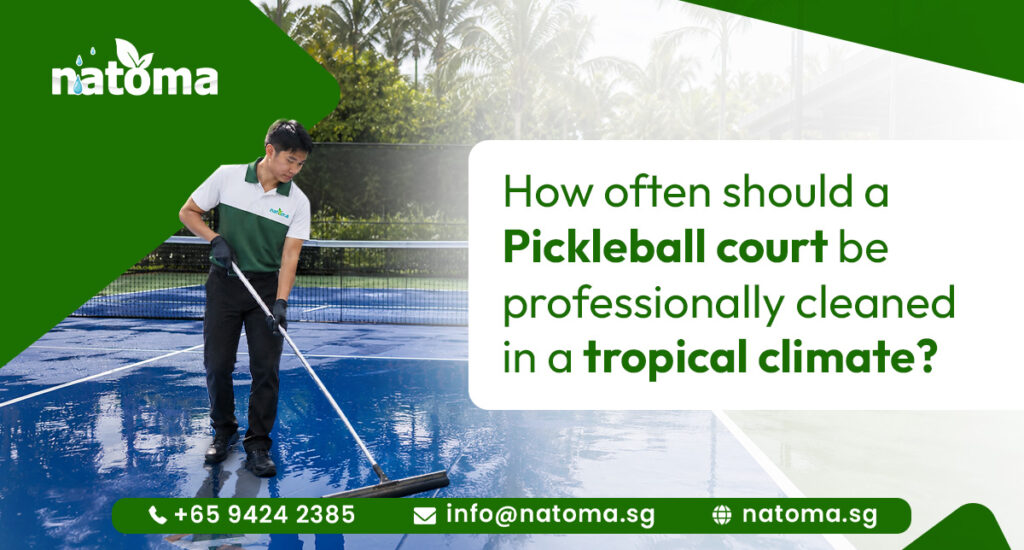
Tropical climates create ideal playing conditions for outdoor sports throughout the year. However, they also create unique maintenance challenges for pickle ball courts. Frequent rainfall, high humidity, strong sunlight, falling leaves, airborne dust, and organic growth can affect court conditions much faster than in cooler climates.
This is why Pickleball Court Maintenance should never be viewed as an occasional task. Regular care helps preserve playing quality, maintain safety standards, and reduce long-term repair costs.
Many facility owners wait until visible dirt, moss, or drainage problems appear before arranging maintenance. Unfortunately, by that stage, surface deterioration may already have started.
Understanding the right cleaning frequency helps protect both the court and the investment behind it.
Why Tropical Weather Creates Extra Maintenance Challenges
Unlike indoor facilities, outdoor courts remain exposed to environmental conditions every day.
Common factors affecting court surfaces include:
Heavy rainfall
High humidity
Tree debris
Dust accumulation
Bird droppings
Organic growth
Standing water
Surface staining
Over time, these conditions can impact both appearance and playability.
Without routine sports court maintenance, courts may become slippery, uneven, or difficult to maintain.
What Happens When Court Cleaning Is Delayed?
Many facility managers assume occasional sweeping is enough.
However, tropical climates accelerate surface contamination.
When cleaning schedules are delayed, courts may experience:
Surface Dirt Accumulation
Dust and debris gradually build up across the playing surface.
Organic Growth
Moss, algae, and mildew can develop in damp areas.
Drainage Issues
Blocked drainage channels may cause standing water after rain.
Reduced Surface Performance
Players may notice inconsistent ball bounce and reduced traction.
Higher Repair Costs
Minor maintenance issues often become larger restoration projects if ignored.
Preventive court surface maintenance is usually far more cost-effective than corrective repairs.
Recommended Cleaning Schedule for Tropical Conditions
The ideal maintenance schedule depends on usage levels, location, and surrounding vegetation.
| Maintenance Activity | Recommended Frequency |
|---|---|
| Debris Removal | Daily |
| Surface Inspection | Weekly |
| Detailed Surface Cleaning | Monthly |
| Professional Court Cleaning | Quarterly |
| Drainage Inspection | Quarterly |
| Surface Condition Assessment | Annually |
This structured approach helps facilities maintain consistent court conditions throughout the year.
Signs Your Court Needs Professional Attention
Facility managers should monitor for early warning signs.
Common indicators include:
Slippery playing areas
Dark surface patches
Moss development
Water pooling
Visible staining
Drainage blockages
Excessive debris buildup
Addressing these issues early helps avoid costly surface restoration work later.
Daily Care Still Matters
Professional cleaning is important, but routine upkeep remains essential.
Daily maintenance may include:
Leaf removal
Debris collection
Visual inspections
Basic sweeping
Waste removal
These simple actions help reduce surface contamination between professional maintenance visits.
The Impact of Humidity on Court Conditions
Humidity is one of the biggest challenges in tropical environments.
Moisture encourages:
Organic growth
Surface staining
Dirt adhesion
Slippery conditions
Courts located near landscaping, water features, or heavily shaded areas often require more frequent Outdoor Pickleball Court Cleaning due to increased moisture exposure.
Understanding these environmental factors helps facility owners plan maintenance more effectively.
How Natoma Supports Long-Term Pickleball Court Maintenance
Maintaining a pickleball court requires more than occasional cleaning. Consistency, supervision, and experience play an important role in preserving surface quality and player safety.
Natoma’s experienced supervisors and maintenance teams support facilities through structured Natoma Sports Facility Maintenance programs designed for tropical environments.
Natoma helps facilities maintain court conditions through:
Scheduled court inspections
Surface cleaning programs
Debris and dirt removal
Moss and algae treatment
Drainage area maintenance
Surface condition monitoring
Preventive maintenance planning
Quarterly maintenance support
Every facility operates differently. Courts with higher usage levels or greater exposure to weather conditions often require customised maintenance schedules.
Through proactive planning and experienced supervision, Natoma helps facilities maintain cleaner courts, safer playing conditions, and more consistent long-term performance.
Maintenance Frequency Depends on Court Usage
Not all pickleball courts experience the same level of activity.
Light Usage Facilities
Examples include:
Private residential courts
Small community courts
Professional maintenance may be required quarterly.
Moderate Usage Facilities
Examples include:
Condominium facilities
Recreation clubs
Professional maintenance is often recommended every two to three months.
High Usage Facilities
Examples include:
Sports clubs
Tournament venues
Multi-court facilities
Monthly professional maintenance may provide better results.
The more activity a court experiences, the more frequently cleaning and inspections should occur.
Why Preventive Maintenance Protects Your Investment
A pickleball court represents a significant facility investment.
Regular court cleaning and maintenance helps:
Extend surface lifespan
Improve player experience
Support safer conditions
Reduce repair costs
Maintain visual appearance
Protect facility reputation
Preventive maintenance focuses on preserving court quality before problems develop
Conclusion
Tropical climates create unique challenges for outdoor pickleball courts. High humidity, rainfall, dust, and organic growth can affect court conditions much faster than many facility owners expect.
Regular Pickleball Court Maintenance, supported by professional cleaning and routine inspections, helps preserve playing quality, improve safety, and reduce long-term maintenance costs.
Rather than waiting for visible problems to appear, facilities that follow structured maintenance schedules often enjoy better court performance, fewer repairs, and longer surface life.
Frequently Asked Questions
Most outdoor courts in tropical climates benefit from professional cleaning every three months, although heavily used facilities may require more frequent maintenance.
Sports court maintenance helps preserve surface condition, improve player safety, support proper drainage, and reduce long-term repair expenses.
Moisture, humidity, shade, and organic debris can create ideal conditions for moss and algae development on outdoor court surfaces.
Yes. Frequent rainfall can contribute to dirt accumulation, drainage issues, surface staining, and organic growth if regular maintenance is not performed.
Professional court cleaning and maintenance may include surface cleaning, debris removal, moss treatment, drainage inspections, condition assessments, and preventive maintenance services.


![𝐖𝐡𝐞𝐧 𝐖𝐚𝐬 𝐘𝐨𝐮𝐫 𝐅𝐚𝐜𝐭𝐨𝐫𝐲 𝐋𝐚𝐬𝐭 𝐃𝐞𝐞𝐩 𝐂𝐥𝐞𝐚𝐧𝐞𝐝?
From regular cleaning to detailed cleaning, our trained team helps keep your facility ready for everyday operations.
📞 +65 9424 2385 | 📩 info@natoma.sg | 🌐 natoma.sg
[Factory Cleaning, Industrial Cleaning, Factory Cleaning Service, Industrial Cleaning Service Singapore]
#FactoryCleaning #IndustrialCleaning #FactoryCleaningSingapore #CommercialCleaning #NatomaCleaning](https://natoma.sg/wp-content/plugins/instagram-feed/img/placeholder.png)