
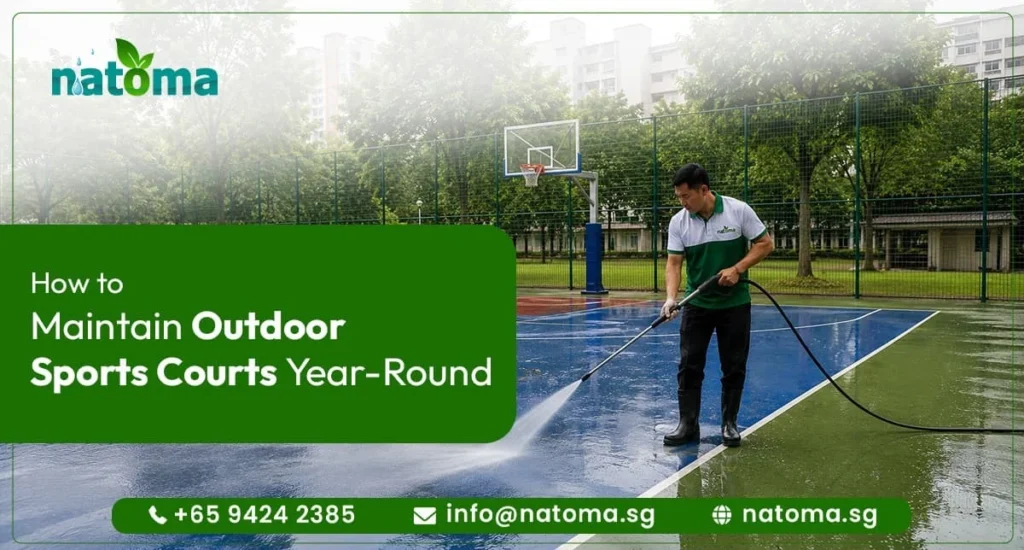
Outdoor sports courts are exposed to far more than regular player activity. Sunlight, rain, humidity, fallen leaves, dust, dirt, moisture and everyday foot traffic can gradually affect the playing surface and surrounding areas.
A court may look well maintained immediately after installation, but its condition can change considerably when routine maintenance is overlooked. Small amounts of dirt can accumulate around court edges, organic debris can block drainage points, and moisture can remain on surfaces after heavy rainfall.
For property managers, sports facility operators, condominiums, schools, clubs and recreational centers, Outdoor Sports Court Cleaning and Maintenance should therefore be treated as an ongoing responsibility rather than an occasional cleaning task.
A structured maintenance program helps preserve court presentation, support consistent playing conditions and identify minor surface problems before they become larger maintenance concerns.
Why Outdoor Courts Need Continuous Maintenance
Outdoor courts experience changing environmental conditions throughout the year.
Unlike indoor sports facilities, they remain exposed to:
Rain and moisture
Strong sunlight
Airborne dust
Fallen leaves and branches
Mud and soil
Bird droppings
Organic growth
Heavy player traffic
Sports equipment and footwear residue
Over time, these factors can affect the appearance and usability of the playing area.
For this reason, Sports Court Maintenance Singapore programs should combine routine cleaning, surface inspection, drainage attention and preventive maintenance rather than relying on occasional deep cleaning alone.
The Four-Part Approach to Better Court Care
A practical way to manage an outdoor sports court is to divide maintenance into four areas: cleaning, inspection, drainage and preventive care.
1. Keep the Playing Surface Free From Debris
Leaves, sand, dust and other loose materials should be removed regularly.
Debris left on a court can accumulate in corners and along boundaries. During wet conditions, organic material can also become more difficult to remove and may contribute to surface deterioration.
Routine Sports Court Cleaning helps keep the playing area clear while allowing maintenance teams to notice changes in the surface more easily.
The cleaning method should always be suitable for the specific court surface. Excessive pressure, unsuitable chemicals or inappropriate equipment can potentially damage specialised coatings.
2. Pay Attention to Court Edges and Corners
Court maintenance should not stop at the playing lines.
Edges, corners, fencing areas and spaces beneath seating can collect considerable amounts of debris. These areas are often overlooked because they do not directly affect gameplay.
However, accumulated dirt can eventually move back onto the playing surface.
A professional Sports Court Cleaning Service should therefore include surrounding areas as part of the maintenance routine.
3. Keep Drainage Areas Clear
Effective drainage is particularly important for outdoor courts in wet weather.
Water should be able to move away from the playing area without unnecessary obstruction. Leaves, soil and other debris can accumulate around drains and drainage channels.
During regular inspections, facility teams should check for:
Blocked drainage points
Standing water
Accumulated leaves
Soil buildup
Damaged drainage covers
Water flow issues
Identifying these conditions early allows property managers to arrange corrective maintenance before repeated water accumulation affects the court.
Different Courts Require Different Maintenance Approaches
Not every outdoor sports court should be maintained in exactly the same way.
Tennis Court Maintenance
Tennis Court Maintenance should focus on keeping the playing surface clear of loose debris while monitoring surface wear, line visibility, drainage and surrounding vegetation.
Regular cleaning is especially important around court boundaries where leaves and dirt can accumulate.
Padel Court Maintenance
Padel facilities require attention to the playing surface as well as glass panels, fencing, access areas and surrounding walkways.
A suitable Padel Court Maintenance programme should address both the playing environment and the supporting infrastructure.
Pickleball Court Cleaning
Pickleball Court Cleaning involves removing dust, leaves and surface debris while maintaining clear court markings.
Because pickleball facilities may contain several courts in one location, scheduled cleaning can help maintain consistent presentation across the entire sports area.
What Changes During Different Weather Conditions?
Year-round maintenance does not mean following exactly the same routine every month.
Instead, maintenance frequency should respond to environmental conditions.
| Condition | Recommended Maintenance Focus |
|---|---|
| Heavy rainfall | Drainage checks and removal of wet debris |
| Hot weather | Surface inspection and debris removal |
| High humidity | Moisture monitoring and organic growth checks |
| Windy conditions | Frequent leaf and debris removal |
| After major events | Thorough court and surrounding-area cleaning |
| High player usage | Increased cleaning and inspection frequency |
This flexible approach allows Sports Facility Maintenance teams to respond to actual site conditions rather than relying solely on a fixed schedule.
Look Beyond the Court Surface
A well-maintained sports facility involves more than the court itself.
Property managers should also monitor:
Player seating
Walkways
Fencing
Gates
Lighting areas
Drainage channels
Equipment storage areas
Waste bins
Landscaping around courts
Access routes
When surrounding areas are neglected, dirt and organic debris can easily migrate back onto the court.
A complete Sports Facility Cleaning programme therefore considers the entire environment rather than concentrating only on the playing surface.
Early Signs That a Court Needs Attention
Regular inspection can help identify problems before they become expensive repairs.
Property managers should look for:
Unusual surface discoloration May indicate accumulated dirt, moisture or environmental exposure.
Standing water Could indicate drainage or surface-level issues.
Heavy debris accumulation Often occurs around edges, corners and fencing.
Fading court markings May indicate the need for specialist surface assessment or line maintenance.
Cracks or surface irregularities Should be documented and assessed by an appropriate specialist.
Organic growth around the court Can become more difficult to manage when allowed to spread.
A professional Sports Court Maintenance Service can help establish routine inspection procedures and identify areas requiring additional attention.
How Often Should Outdoor Sports Courts Be Cleaned?
There is no universal cleaning frequency for every court.
The appropriate schedule depends on:
Court type
Surface material
Location
Weather exposure
Number of players
Surrounding landscaping
Nearby construction activity
Frequency of events
Amount of debris accumulation
A lightly used residential court may require a different programme from a heavily used commercial sports facility.
For this reason, professional Outdoor Court Cleaning should be planned around actual site conditions and usage rather than using the same schedule for every property.
Natoma: Professional Sports Court Maintenance Support
Maintaining an outdoor sports facility requires consistency, suitable cleaning practices and attention to details that are often overlooked.
Natoma provides professional Sports Court Maintenance Singapore solutions for facilities looking to maintain cleaner, well-presented and properly maintained playing environments.
Our approach can include:
| Natoma Sports Court Support | Maintenance Focus |
|---|---|
| Court Cleaning | Removal of dust, leaves and accumulated surface debris |
| Deep Court Cleaning | Detailed cleaning based on the court surface and site requirements |
| Tennis Court Maintenance | Routine cleaning and surrounding-area maintenance |
| Padel Court Maintenance | Court, fencing, glass and surrounding-area support |
| Pickleball Court Cleaning | Surface and surrounding-area cleaning |
| Drainage Area Cleaning | Removal of leaves, soil and debris around drainage points |
| Perimeter Cleaning | Maintaining walkways, edges and access areas |
| Sports Facility Cleaning | Broader cleaning support for recreational environments |
| Scheduled Maintenance | Planned cleaning based on usage and site conditions |
| Quality Inspection | Supervisor-led checks to maintain consistent service standards |
Natoma’s experienced teams can work with property managers and facility operators to develop maintenance routines suited to the individual sports facility.
The objective is not simply to clean the court after it becomes visibly dirty. It is to establish a consistent maintenance approach that supports the condition, presentation and usability of the facility over time.
Why Preventive Sports Court Maintenance Matters
Waiting until a court develops obvious problems can make maintenance more complicated.
Regular Sports Court Maintenance gives property managers an opportunity to identify environmental debris, drainage concerns, surface changes and surrounding-area issues earlier.
A preventive approach can help:
Maintain better court presentation
Reduce accumulated debris
Support cleaner playing environments
Protect surrounding facilities
Improve maintenance planning
Identify minor issues earlier
Support the long-term condition of the facility
Most importantly, consistent maintenance creates a better experience for the people who use the court.
A Better Year-Round Maintenance Routine

Conclusion
Outdoor sports courts require continuous attention because environmental exposure and player activity can gradually affect their condition. Rain, humidity, dust, leaves, soil and heavy usage all contribute to maintenance requirements.
Effective Outdoor Sports Court Maintenance combines routine cleaning with inspections, drainage care and preventive attention. Tennis, padel and pickleball courts may also require different maintenance approaches depending on their surface and surrounding facilities.
For property managers and sports facility operators, working with an experienced Sports Court Maintenance Service provider can make ongoing maintenance more organised and consistent.
Natoma supports sports facilities with professional Sports Court Cleaning, Tennis Court Maintenance, Padel Court Maintenance, Pickleball Court Cleaning, and broader Sports Facility Maintenance solutions designed around individual property requirements.
Frequently Asked Questions
The required frequency depends on court usage, weather exposure, surrounding landscaping and debris levels. Regular Sports Court Cleaning Service helps prevent dirt and organic debris from accumulating.
Tennis Court Maintenance should include routine debris removal, surface inspections, drainage checks, perimeter cleaning and appropriate specialist maintenance when surface issues are identified.
Pickleball Court Cleaning should use cleaning methods and equipment appropriate for the specific court surface. Regular removal of dust, leaves and loose debris helps maintain the playing environment.
Padel Court Maintenance should cover the playing surface as well as fencing, glass panels, entrances, surrounding walkways and drainage areas. Regular inspections help identify maintenance issues early.
Yes. Rain can increase moisture, move debris across the surface and contribute to drainage problems. Post-rain inspections and Outdoor Court Cleaning can help keep the facility properly maintained.
Good drainage helps prevent prolonged water accumulation. Regular Sports Facility Maintenance should include checking drainage points and removing leaves, soil and other obstructions.
Yes. Natoma provides professional Sports Court Maintenance Singapore solutions covering court cleaning, surrounding-area maintenance and scheduled support for tennis, padel, pickleball and other sports facilities.


![𝐖𝐡𝐞𝐧 𝐖𝐚𝐬 𝐘𝐨𝐮𝐫 𝐅𝐚𝐜𝐭𝐨𝐫𝐲 𝐋𝐚𝐬𝐭 𝐃𝐞𝐞𝐩 𝐂𝐥𝐞𝐚𝐧𝐞𝐝?
From regular cleaning to detailed cleaning, our trained team helps keep your facility ready for everyday operations.
📞 +65 9424 2385 | 📩 info@natoma.sg | 🌐 natoma.sg
[Factory Cleaning, Industrial Cleaning, Factory Cleaning Service, Industrial Cleaning Service Singapore]
#FactoryCleaning #IndustrialCleaning #FactoryCleaningSingapore #CommercialCleaning #NatomaCleaning](https://natoma.sg/wp-content/plugins/instagram-feed/img/placeholder.png)