
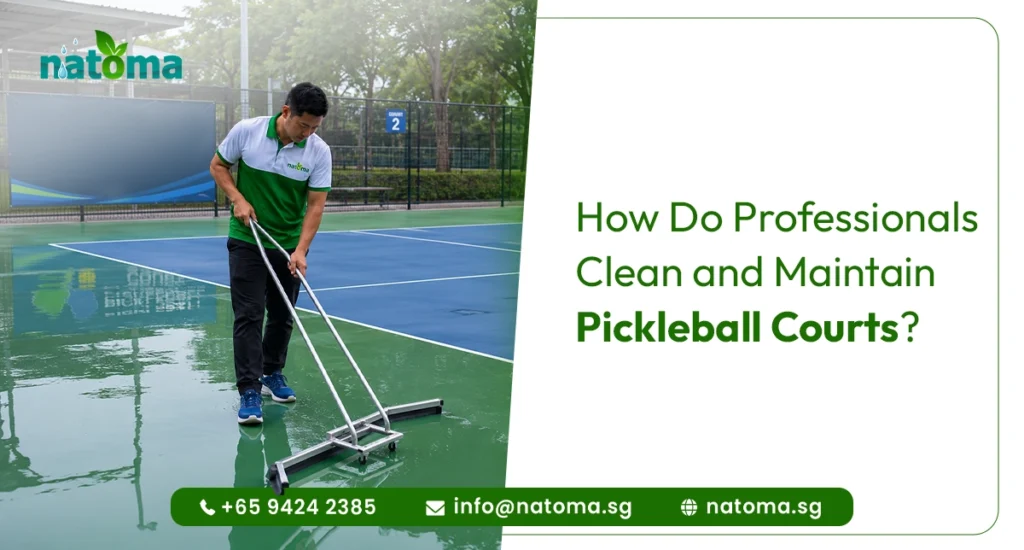
Pickleball is one of the fastest-growing sports worldwide, and Singapore continues to see increasing demand for dedicated courts in sports clubs, recreational facilities, schools, condominiums, and community spaces.
However, many facility owners focus heavily on court construction and underestimate the importance of ongoing Pickleball Court Maintenance.
The condition of a pickleball court today determines its performance tomorrow
A court that looks clean from a distance may still contain dust accumulation, algae growth, drainage issues, surface contamination, and wear patterns that gradually affect performance and safety.
Professional Pickleball Court Cleaning Service providers understand that court maintenance is not a one-time activity. It is a structured process that protects the playing surface, supports player experience, and helps facilities avoid costly repairs.
Why Pickleball Court Maintenance Matters
Every pickleball court is exposed to daily environmental conditions.
These include:
Dust accumulation
Foot traffic
Rainwater exposure
Leaves and debris
UV exposure
Surface contamination
Moss and algae growth
Without proper maintenance, these factors gradually reduce court quality and increase Long-Term Maintenance Costs.
What Professionals Inspect Before Starting Maintenance
Professional maintenance begins with inspection.
Rather than immediately cleaning the court, experienced teams first assess:
| Inspection Area | Purpose |
|---|---|
| Court Surface | Identify wear patterns |
| Drainage Areas | Check water flow |
| Court Lines | Verify visibility |
| Fencing Areas | Remove surrounding debris |
| Surface Texture | Assess grip condition |
| Perimeter Areas | Prevent contamination |
This evaluation helps determine the most suitable maintenance approach.
Common Problems Found on Poorly Maintained Courts
Professional pickleball court cleaning often reveals issues that may not be immediately visible.
Surface Contamination
Dust, sand, and debris gradually affect ball movement and player footing.
Algae Growth
Moisture retention can encourage algae formation, creating slippery conditions.
Drainage Blockages
Blocked drains increase water pooling and surface deterioration.
Surface Wear
Heavy usage can create uneven wear patterns across playing zones.
Court Line Fading
Reduced line visibility affects gameplay accuracy and player experience.
Routine maintenance helps address these issues before they become expensive repair projects.
How Professional Maintenance Helps Prevent Costly Repairs
Many facility managers only act when visible damage appears. Unfortunately, repairs often cost significantly more than preventive maintenance.
Professional sports court cleaning service programs help reduce risks associated with:
Surface deterioration
Water damage
Moss growth
Drainage failures
Structural wear
Premature resurfacing
Preventive maintenance remains one of the most effective ways to protect court investments.
Equipment Used by Professional Court Maintenance Teams
Effective maintenance requires specialised tools.
Professional teams often use:
Court brushes
Mechanical sweeping equipment
Air blowers
Pressure cleaning systems
Moss treatment equipment
Surface cleaning tools
Using the correct equipment helps maintain court surfaces without causing unnecessary damage.
Benefits of Scheduled Pickleball Court Maintenance
Facilities that follow structured maintenance schedules often experience:
Better Playing Conditions
Clean surfaces support more consistent gameplay.
Improved Court Appearance
A well-maintained court creates a stronger first impression.
Enhanced User Experience
Players appreciate clean, well-maintained facilities.
Reduced Repair Costs
Preventive maintenance helps minimise major corrective work.
Extended Surface Lifespan
Regular care protects long-term court performance.
How Natoma's Experienced Team Maintains Pickleball Courts Throughout the Year
Unlike basic cleaning routines, Natoma Pickleball Court Maintenance Service follows a structured maintenance schedule designed to protect court performance across different seasons and usage levels.
Professional maintenance involves ongoing care rather than occasional cleaning visits.
Daily Tasks
Removal of loose debris
Surface inspection
Leaf clearing
Spot cleaning
Drainage observation
Perimeter cleaning
Daily attention prevents small issues from becoming larger maintenance problems.
Weekly Tasks
Mechanical surface brushing
Dust removal
Fence-line cleaning
Court edge maintenance
Drain clearing checks
Surface condition review
Weekly maintenance helps preserve court appearance and playing conditions.
Monthly Tasks
Deep surface cleaning
Algae prevention treatment
Court line inspection
Drainage performance checks
Perimeter vegetation control
Surface contamination removal
Monthly maintenance helps maintain consistent court quality.
Annual Tasks
Full court condition assessment
Surface wear evaluation
Repair recommendations
Equipment inspection
Drainage system review
Long-term maintenance planning
Annual inspections help facilities identify potential issues before major repairs become necessary.
Seasonal Tasks
Heavy rain preparation
Moss treatment programs
Surface drying management
Debris removal after storms
Drainage maintenance
Environmental condition monitoring
Seasonal maintenance protects courts from weather-related deterioration.
When Should Facilities Schedule Professional Maintenance?
Maintenance frequency depends on:
- Court usage levels
- Outdoor exposure
- Weather conditions
- Surrounding vegetation
- Facility requirements
- Type of court surface material
- Drainage condition and water stagnation
- Dirt, dust, and debris accumulation
- Frequency of sports events or tournaments
- Foot traffic intensity and player volume
- Presence of algae, moss, or surface growth
- Line marking condition and fading
- Cracks, surface wear, or uneven areas
- Safety risks like slipping or poor traction
High-use courts generally benefit from more frequent maintenance schedules than courts with occasional usage.
Regular Professional Maintenance helps prevent surface damage, reduces long-term repair costs, improves player safety, and maintains consistent playing conditions.
Conclusion
Natoma Professional Pickleball Court Maintenance is far more than simple cleaning. It is a structured process designed to preserve court quality, improve player experience, and reduce long-term repair costs.
From daily inspections and weekly maintenance to seasonal care and annual assessments, every stage plays an important role in protecting court performance.
With experienced maintenance teams, specialized equipment, and preventive maintenance strategies, facilities can maintain safer, cleaner, and more enjoyable pickleball courts throughout the year.
Frequently Asked Questions
Most facilities benefit from regular pickleball court cleaning service schedules that include daily inspections, weekly maintenance, monthly deep cleaning, and annual condition assessments.
Regular pickleball court maintenance Singapore programmes help maintain surface quality, improve player safety, reduce repair costs, and extend court lifespan.
Routine court maintenance services help identify minor issues early, preventing larger problems that may require expensive resurfacing or corrective repairs.
Regular pickleball court maintenance helps maintain proper grip and surface quality for safe gameplay. It reduces wear and tear caused by weather and heavy usage. Consistent care also keeps the court looking clean and professional. This helps avoid costly repairs in the long run.


![𝐖𝐡𝐞𝐧 𝐖𝐚𝐬 𝐘𝐨𝐮𝐫 𝐅𝐚𝐜𝐭𝐨𝐫𝐲 𝐋𝐚𝐬𝐭 𝐃𝐞𝐞𝐩 𝐂𝐥𝐞𝐚𝐧𝐞𝐝?
From regular cleaning to detailed cleaning, our trained team helps keep your facility ready for everyday operations.
📞 +65 9424 2385 | 📩 info@natoma.sg | 🌐 natoma.sg
[Factory Cleaning, Industrial Cleaning, Factory Cleaning Service, Industrial Cleaning Service Singapore]
#FactoryCleaning #IndustrialCleaning #FactoryCleaningSingapore #CommercialCleaning #NatomaCleaning](https://natoma.sg/wp-content/plugins/instagram-feed/img/placeholder.png)