
Introduction:
Public transport is the backbone of daily life in Singapore, and MRT stations handle thousands of commuters every day. With such heavy foot traffic, maintaining cleanliness is not optional; it is a daily operational requirement.
A professional MRT station cleaning checklist ensures stations remain presentable, functional, and compliant with public hygiene standards. More importantly, it supports commuter confidence and smooth transport operations.
In this blog, we break down what’s typically included in a professional MRT station cleaning checklist in Singapore and why structured cleaning matters for large-scale transit environments.
Why MRT Station Cleaning Requires a Structured Checklist
MRT stations are complex spaces.
They include platforms, concourses, escalators, lifts, restrooms, ticketing areas, and staff zones, all with different cleaning needs.
Without a detailed checklist, cleaning becomes inconsistent. Some areas may be overlooked, while others receive unnecessary repetition. A professional checklist ensures:
No critical zone is missed
Cleaning tasks are prioritized based on usage.
Teams follow a standardized process.
Audits and inspections are easier to manage.
This structured approach is what separates professional transit cleaning from basic janitorial work.
Core Areas Covered in an MRT Station Cleaning Checklist
A professional checklist is usually divided by zones. Each zone has its own frequency, tools, and cleaning method.
1. Station Entrances and External Areas
Entrances form the first impression for commuters.
Checklist items often include:
Sweeping and washing entrance flooring
Removing litter from walkways
Cleaning handrails and doors
Clearing debris near escalator landings
These tasks are typically performed multiple times a day due to constant exposure to outdoor dust and foot traffic.
2. Ticketing and Concourse Areas
Concourse areas see continuous movement throughout the day.
Cleaning tasks usually involve:
Floor cleaning using mechanical scrubbers
Wiping ticket gates and card readers
Cleaning information panels and signboards
Emptying bins and replacing liners
High-touch points are prioritized to reduce visible grime buildup during peak hours.
3. Platforms and Trackside Zones
Platforms demand extra care due to commuter safety and operational sensitivity.
Checklist coverage includes:
Sweeping and mopping platform floors
Cleaning platform screen doors
Removing dust from edges and corners
Spot-checking drains and grates
Cleaning schedules are often aligned with train timings to avoid disruption.
4. Escalators and Lifts
Escalators and lifts require specialized attention.
Professional checklists usually include:
Cleaning escalator steps and side panels
Wiping handrails and control buttons
Floor cleaning inside lift cabins
Removing smudges from mirrors and walls
These areas are inspected frequently due to heavy usage.
5. Public Restrooms
Restrooms are one of the most closely monitored areas in MRT stations.
A professional checklist typically covers:
Toilet bowl and urinal cleaning
Sink and countertop wiping
Floor washing and drying
Replenishing consumables
Odor control measures
Restrooms are cleaned on a strict schedule, often hourly during peak periods.
6. Staff-Only and Back-of-House Areas
While commuters don’t see these spaces, they are still critical.
Checklist items include:
Cleaning staff rooms and offices
Floor care in equipment storage areas
Waste disposal and segregation
Pantry and utility sink cleaning
Clean staff areas support better workforce efficiency and morale.
Cleaning Frequency and Shift Planning
Professional MRT cleaning is not a once-a-day task.
Checklists are usually organized by
Hourly tasks – bins, restrooms, visible floor debris
Daily tasks – full floor washing, escalators, lifts
Weekly tasks – deep cleaning corners, vents, and signage
Periodic tasks—high-level dusting and machine-assisted cleaning
This layered scheduling ensures consistent results without operational disruption.
Use of Professional Equipment and Trained Teams
An effective checklist goes hand in hand with the right tools.
Most MRT cleaning plans include:
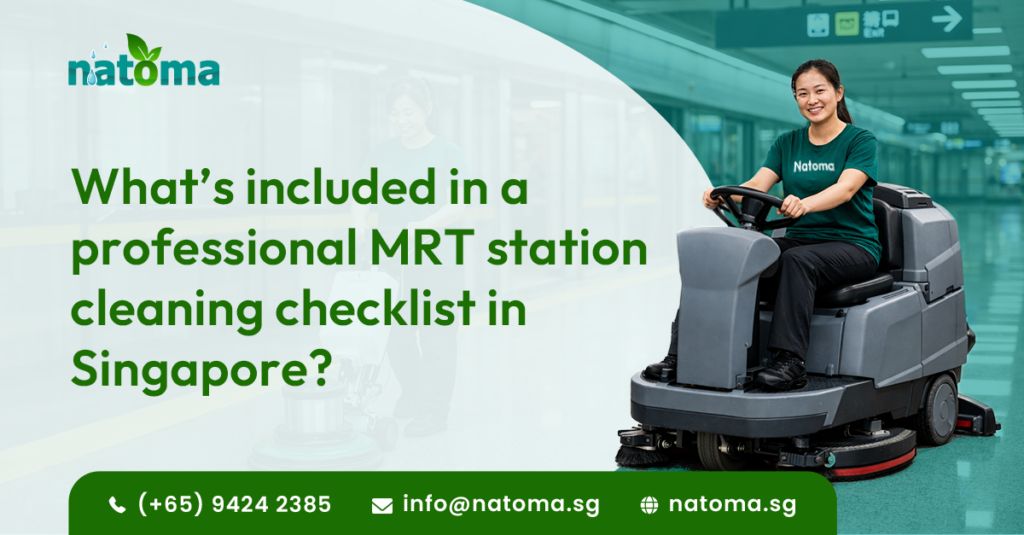
Ride-on or walk-behind floor scrubbers
Escalator cleaning machines
High-filtration vacuums
Color-coded tools for zone separation
Trained cleaners follow standard operating procedures to ensure efficiency and accountability. Service providers like Natoma Cleaning Services implement such structured checklists to support high-traffic public infrastructure environments across Singapore.
Why Checklists Matter for Compliance and Public Trust
Singapore maintains high public cleanliness expectations.
A professional MRT station cleaning checklist helps:
Meet regulatory and audit requirements
Maintain consistent service standards
Reduce complaints and downtime
Build long-term commuter trust
Consistency is the key. When every task is documented and followed, results are visible and measurable.
Final Thoughts
MRT Station Cleaning Company in Singapore is a carefully planned operation, not a reactive task. A professional checklist ensures that every corner, from entrances to platforms, is addressed with purpose and precision.
For transit authorities, such structured cleaning isn’t just about appearance. It’s about reliability, accountability, and maintaining public confidence in everyday transport spaces.