
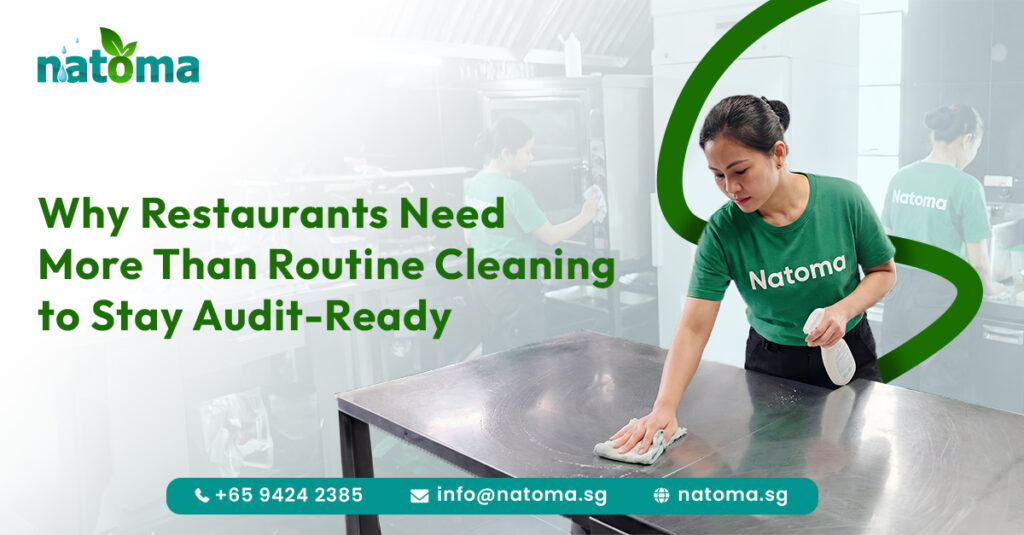
Introduction:
Running a restaurant in Singapore means operating under strict hygiene expectations. Customers expect clean dining spaces, fresh food preparation areas, and well-maintained washrooms. Simultaneously, regulatory inspections and food safety audits require restaurants to maintain consistent cleanliness standards beyond what routine cleaning alone can achieve.
A restaurant’s cleanliness is judged long before the first dish is served.
Many restaurant operators rely on basic cleaning routines such as wiping tables, sweeping floors, and disposing of waste at the end of the day. While these steps are essential, they often fail to address deeper hygiene risks hidden in kitchens, storage areas, equipment surfaces, and ventilation systems.
According to the Public Cleanliness Satisfaction Survey conducted by Singapore Management University, 85% of Singapore residents reported satisfaction with the cleanliness of food outlets, highlighting the importance of maintaining strict hygiene standards in restaurants.
This statistic highlights an important reality: maintaining visible cleanliness is not enough. Restaurants must adopt structured cleaning systems to remain audit-ready, protect food safety, and maintain customer trust.
Routine Cleaning vs Audit-Ready Cleaning
Routine Cleaning focuses on daily appearance. Tables are wiped, floors are swept, and waste bins are cleared. These tasks keep the dining area presentable but rarely address hidden contamination risks.
Audit-ready cleaning goes deeper.
It includes detailed sanitation of kitchen equipment, grease removal in cooking areas, proper washroom hygiene, and attention to high-touch surfaces that accumulate bacteria throughout the day.
Without this deeper approach, restaurants may appear clean to customers but still fail inspection standards.
Why Restaurant Audits Focus on Hidden Areas
Health inspections are not limited to visible dining areas. Inspectors often check locations where contamination risks are highest.
Common inspection points include:
Cooking equipment surfaces
Ventilation and exhaust systems
Food storage areas
Drainage and floor corners
Waste disposal zones
Routine cleaning rarely addresses these areas consistently. As a result, restaurants may face warnings or hygiene issues even when front-of-house spaces look clean.
The Cleaning Gaps Restaurants Often Miss Before Inspections
Many restaurants unintentionally overlook certain cleaning tasks because they fall outside daily routines. These gaps become obvious during audits.
Inspection Area | Common Cleaning Gap | Why It Matters |
Kitchen Equipment | Grease buildup behind and under cooking equipment | Grease attracts pests and increases fire risk |
Exhaust & Ventilation | Infrequent cleaning of filters and ducts | Grease accumulation reduces air quality |
Food Storage Areas | Improper shelf and container cleaning | Risk of cross-contamination |
Floor Corners & Drains | Dirt buildup in hidden corners | Creates hygiene risks and odours |
Washrooms | Irregular sanitization during busy hours | Affects customer perception and safety |
Waste Zones | Overflowing bins or residue around disposal areas | Can attract pests and cause contamination. |
These small oversights can lead to inspection failures, customer complaints, and operational disruptions.
The Importance of Professional Restaurant Cleaning
Professional Restaurant Cleaning Service Singapore providers bring structured processes to ensure every area is cleaned according to hygiene standards.
Instead of relying on ad-hoc cleaning tasks, professionals follow systematic cleaning plans that cover both visible and hidden surfaces.
This includes:
Deep kitchen sanitation
Degreasing cooking equipment
Proper waste area cleaning
Washroom disinfection
Dining space hygiene maintenance
This structured approach helps restaurants remain prepared for inspections at any time.
How Natoma Helps Restaurants Maintain Audit-Ready Cleaning Standards
Natoma Experienced
Maintaining hygiene in restaurant environments requires both skill and consistency. Natoma Restaurant Cleaning teams understand the operational demands of commercial kitchens and dining spaces.
Natoma focuses on cleaning strategies that support daily restaurant operations without interrupting service.
Kitchen Cleaning Support
Professional cleaners focus on high-risk zones such as cooking stations, food preparation counters, and grease-prone equipment areas. This ensures hygiene standards remain consistent throughout operations.
Dining Area Hygiene
Tables, chairs, and service areas are maintained to support a comfortable and clean dining experience for customers.
Washroom Sanitation
Washrooms are cleaned regularly using proper sanitation methods to maintain hygiene and freshness for guests.
Waste Management Areas
Waste disposal zones receive regular cleaning attention to prevent odours, contamination, and pest attraction.
Hidden Surface Cleaning
Natoma teams focus on areas that are often missed during routine cleaning, ensuring kitchens and service spaces remain inspection-ready.
This comprehensive approach allows restaurants to maintain high hygiene standards without disrupting their daily workflow.
Why Restaurants Choose Professional Cleaning Support
Restaurants that invest in structured cleaning support benefit in several ways:
Improved compliance with hygiene inspections
Reduced contamination risks in kitchens
Better customer perception of cleanliness
Lower long-term maintenance costs
Clean environments also contribute to better staff morale and safer food preparation processes.
How Cleaning Standards Influence Restaurant Reputation
In today’s digital environment, customers frequently share dining experiences online. Reviews often mention cleanliness along with food quality and service.
When customers notice dirty tables, unpleasant odors, or poorly maintained washrooms, their perception of the restaurant changes immediately.
On the other hand, consistently clean environments strengthen customer confidence and encourage repeat visits.
This is why professional commercial restaurant cleaning plays an important role in brand reputation and customer trust.
Building a Culture of Hygiene in Restaurants
Cleaning should not be viewed as a single task performed at the end of the day. Instead, it should be integrated into restaurant operations as a continuous process.
Restaurants that maintain strong hygiene cultures typically combine:
Daily routine cleaning
Scheduled deep cleaning
Professional cleaning support
Staff awareness and training
This balanced approach ensures hygiene standards remain consistent during busy service hours and quieter operational periods.
Conclusion:
Routine cleaning alone cannot guarantee that restaurants remain inspection-ready. Modern restaurant operations require deeper sanitation practices that address hidden contamination risks and maintain consistent hygiene standards.
By investing in professional Restaurant Cleaning Service Singapore solutions, restaurants can protect their reputation, improve customer confidence, and stay prepared for audits at any time.
With experienced teams and structured cleaning practices, Natoma Restaurant Cleaning helps food businesses maintain reliable hygiene standards across kitchens, dining areas, and service spaces ensuring every restaurant stays ready for inspections and delivers a safe dining experience.