
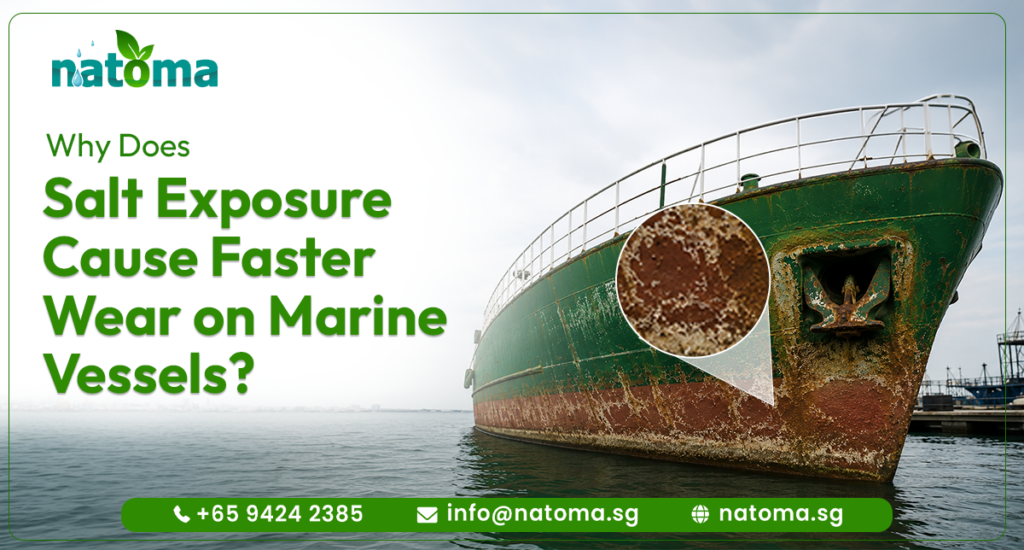
Marine vessels operate in one of the harshest environments on earth. Every day, ships, barges, workboats, ferries, offshore support vessels, and marine equipment are exposed to seawater, humidity, salt spray, and changing weather conditions.
While these conditions are part of normal marine operations, prolonged salt exposure can significantly accelerate wear and deterioration across vessel surfaces, equipment, and structural components.
This is why Marine Vessel Cleaning Service, Marine Cleaning Service, and routine Vessel Maintenance play an important role in protecting marine assets and extending operational lifespan.
Without regular cleaning and preventive maintenance, salt deposits continue to accumulate, increasing the risk of corrosion, surface damage, equipment degradation, and costly repairs.
Understanding Why Salt Is So Damaging
Many people assume water is the primary cause of deterioration.
However, salt is often the bigger problem.
Unlike fresh water, seawater contains dissolved salts that remain behind after moisture evaporates.
These salt particles:
Adhere to vessel surfaces
Attract moisture continuously
Accelerate corrosion processes
Damage protective coatings
Increase metal deterioration
Even when a vessel appears dry, salt deposits often remain on surfaces.
Over time, these deposits continue affecting vessel condition long after exposure occurs.
Where Salt Accumulates on Marine Vessels
Salt exposure affects almost every part of a vessel.
Some areas are especially vulnerable.
Exterior Hull Surfaces
Constant seawater contact increases salt accumulation and surface wear.
Deck Areas
Salt spray settles continuously on exposed deck surfaces.
Railings and Metal Structures
Protective coatings can deteriorate if salt residue is not removed regularly.
Equipment and Machinery
Salt contamination can affect moving components and exposed systems.
Walkways and Working Areas
Frequent exposure creates ongoing maintenance requirements.
Storage Compartments
Salt-laden air often reaches enclosed spaces where buildup may go unnoticed.
The Chain Reaction Salt Creates
Salt damage rarely happens overnight.
Instead, it develops gradually.
A typical deterioration cycle may include:
| Stage | Impact on Vessel |
|---|---|
| Salt Deposition | Residue settles on surfaces |
| Moisture Retention | Salt attracts additional moisture |
| Coating Degradation | Protective layers weaken |
| Corrosion Development | Metal surfaces begin deteriorating |
| Structural Damage | Repairs become necessary |
| Increased Costs | Maintenance expenses rise |
Early intervention is usually far less expensive than major repairs.
Corrosion Is One of the Biggest Risks
Corrosion remains one of the most costly challenges in marine environments.
According to global maritime maintenance studies, corrosion-related issues account for a significant portion of vessel maintenance expenditure throughout a vessel’s operational life.
Corrosion can affect:
Steel structures
Deck equipment
Railings
Fasteners
Mechanical systems
Storage compartments
This is why many vessel operators invest in regular Marine Vessel Maintenance and Marine Cleaning Service programs.
Why Visual Inspections Are Not Enough
Many salt-related problems begin before visible damage appears.
A vessel may look clean while hidden salt deposits continue accumulating.
Common hidden risks include:
Microscopic corrosion
Coating breakdown
Moisture retention
Equipment contamination
Surface degradation
Routine inspections combined with professional cleaning help identify these issues earlier.
Areas Most Commonly Overlooked During Cleaning
Marine cleaning requires attention to detail.
Some commonly missed locations include:
Under Equipment Structures
Salt often accumulates beneath machinery and fixtures.
Drainage Channels
Blocked drainage areas can trap moisture and contaminants.
Handrails and Supports
Frequently exposed to salt spray.
Corners and Access Points
Difficult-to-reach locations often collect residue.
Mechanical Compartments
Hidden contamination may affect performance over time.
Professional Ship Cleaning Service providers understand where these risks typically develop.
The Financial Impact of Delayed Cleaning
Some operators delay cleaning schedules to reduce short-term costs.
However, neglected salt buildup often leads to:
More frequent repairs
Increased maintenance downtime
Equipment replacement
Surface restoration work
Higher operational costs
Preventive cleaning is generally more economical than corrective maintenance.
Why Marine Cleaning Is More Than Appearance
Many people associate vessel cleaning with appearance.
In reality, cleaning supports:
Asset preservation
Equipment reliability
Workplace safety
Operational efficiency
Maintenance planning
Long-term cost control
A structured Marine Cleaning Service program helps reduce the risks associated with continuous salt exposure.
How Natoma Supports Professional Marine Vessel Maintenance
Marine environments require specialised cleaning knowledge, experienced manpower, and structured maintenance procedures.
Natoma provides Professional Marine Vessel Cleaning Service solutions designed to help vessel operators manage the ongoing challenges created by salt exposure.
Natoma’s experienced teams support:
Vessel Surface Cleaning
Removal of accumulated salt deposits and marine contaminants.
Deck Cleaning
Maintaining cleaner and safer working surfaces.
Equipment Cleaning Support
Helping reduce contamination around exposed marine equipment.
High-Reach Cleaning
Accessing difficult vessel areas safely and effectively.
Supervisor-Led Operations
Experienced supervisors oversee cleaning activities to maintain service consistency.
Preventive Maintenance Support
Structured cleaning schedules help reduce long-term deterioration.
Through professional Marine Cleaning Service, Ship Cleaning Service, and Marine Vessel Maintenance solutions, Natoma helps vessel operators protect valuable marine assets while supporting operational efficiency.
Long-Term Protection Starts With Consistency
Marine vessels face salt exposure every day.
The challenge is not avoiding salt entirely.
The goal is managing its impact effectively.
Facilities and vessel operators that follow structured cleaning schedules often experience:
Lower maintenance costs
Better equipment performance
Improved asset lifespan
Reduced corrosion risks
More predictable maintenance planning
Consistent cleaning remains one of the most effective strategies for long-term vessel protection.
Conclusion
Salt exposure remains one of the biggest challenges faced by marine vessels operating in coastal and offshore environments. Continuous contact with seawater, salt spray, and humid conditions can gradually accelerate corrosion, damage protective coatings, and affect vessel surfaces, equipment, and structural components if not managed properly.
With extensive experience in the marine sector, Natoma understands the long-term impact that salt buildup can have on vessel performance and maintenance costs. Through professional Marine Vessel Cleaning Service, scheduled cleaning programs, and supervisor-led maintenance support, Natoma helps vessel operators minimize salt-related deterioration, protect valuable marine assets, and maintain cleaner, more reliable vessels for long-term operational efficiency.
Frequently Asked Questions
Salt attracts moisture and accelerates corrosion. Regular Marine Vessel Cleaning Service helps remove salt buildup before it causes damage to vessel surfaces and equipment.
Decks, hull surfaces, railings, equipment zones, drainage areas, and exposed metal structures often require routine Ship Cleaning Service support.
Yes. Preventive Marine Vessel Maintenance and professional Marine Cleaning Service programs help reduce corrosion risks, extend asset lifespan, and lower long-term repair .
Common signs include rust spots, peeling paint, surface staining, salt residue, drainage issues, and equipment deterioration.5. Can salt exposure affect vessel equipment? Yes. Salt deposits can accelerate corrosion, damage coatings, and increase wear on exposed equipment and structural components.expenses.
Natoma provides professional Marine Vessel Cleaning Service, deck cleaning, vessel maintenance support, high-reach cleaning, and supervisor-led marine cleaning solutions tailored to operational requirements.


![𝐖𝐡𝐞𝐧 𝐖𝐚𝐬 𝐘𝐨𝐮𝐫 𝐅𝐚𝐜𝐭𝐨𝐫𝐲 𝐋𝐚𝐬𝐭 𝐃𝐞𝐞𝐩 𝐂𝐥𝐞𝐚𝐧𝐞𝐝?
From regular cleaning to detailed cleaning, our trained team helps keep your facility ready for everyday operations.
📞 +65 9424 2385 | 📩 info@natoma.sg | 🌐 natoma.sg
[Factory Cleaning, Industrial Cleaning, Factory Cleaning Service, Industrial Cleaning Service Singapore]
#FactoryCleaning #IndustrialCleaning #FactoryCleaningSingapore #CommercialCleaning #NatomaCleaning](https://natoma.sg/wp-content/plugins/instagram-feed/img/placeholder.png)