
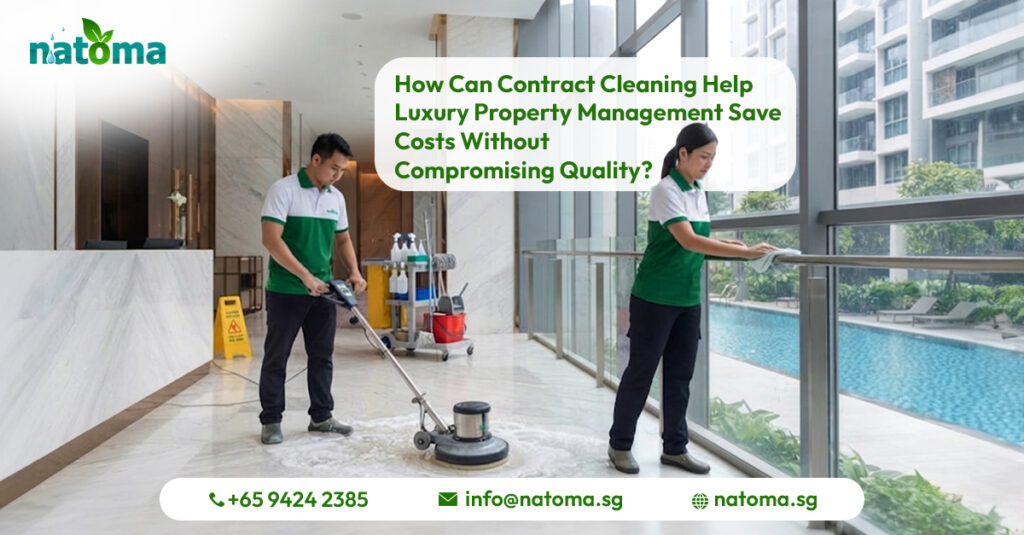
Managing a luxury property involves more than maintaining its appearance. A professional Property Management Service must ensure that shared spaces, facilities, entrances, and surrounding areas remain clean, comfortable, and well-maintained for residents, tenants, and visitors.
However, maintaining these standards can become expensive when cleaning services are arranged separately or managed without a proper schedule. Labour costs, cleaning equipment, supplies, and unexpected maintenance requirements can increase the overall operating budget.
This is where Contract Cleaning Services can make a difference. Instead of arranging cleaning whenever a requirement arises, property managers can work with a professional cleaning company under an agreed service arrangement. This makes it easier to plan cleaning activities, manage resources, and monitor service quality.
For luxury residential properties, condominiums, and premium commercial developments, the goal is not simply to reduce expenses. It is to maintain high property standards while using the available budget more effectively.
Let’s explore how contract cleaning can help luxury property management control costs without compromising cleaning quality.
1. Why Is Cleaning an Important Part of Luxury Property Management?
Luxury properties are expected to maintain high standards across their facilities. Residents and visitors notice the condition of common areas, entrances, lifts, swimming pools, and other shared spaces.
Even small cleaning issues can affect how people view the property.
Some important areas that require regular cleaning include:
- Main entrances and lobbies: Maintain clean floors, glass doors, reception areas, and visitor waiting spaces.
- Lift interiors and corridors: Remove dust, fingerprints, and visible marks from frequently used areas.
- Swimming pools and surrounding spaces: Maintain poolside flooring and nearby facilities according to their cleaning requirements.
- Gym and recreational facilities: Clean equipment, surroundings, floors, and shared touchpoints.
- Car parks and walkways: Remove dust, litter, and accumulated dirt from high-traffic areas.
- Gardens and outdoor common areas: Maintain general cleanliness by managing fallen leaves, debris, and waste.
These areas require different cleaning methods and frequencies. Without proper planning, property managers may spend more on repeated cleaning work while overlooking less visible maintenance requirements.
A Professional Property Cleaning Service helps establish a consistent approach to maintaining different areas of the development.
2. What Makes Contract Cleaning More Cost-Effective?
Contract cleaning allows property managers to arrange cleaning services based on an agreed scope, frequency, and service schedule.
Instead of managing cleaning requirements separately, the property can follow a planned arrangement with a dedicated service provider.
This offers several practical benefits:
- Predictable cleaning expenses: Agreed service arrangements make it easier to plan monthly or periodic cleaning budgets.
- Better workforce planning: Cleaning personnel can be allocated according to the property’s daily requirements.
- Reduced administrative work: Property managers have a central service provider for the agreed cleaning responsibilities.
- Consistent cleaning schedules: Daily, weekly, and periodic tasks can be planned in advance.
- Better resource management: Equipment and cleaning supplies can be arranged according to the agreed scope.
- Easier service monitoring: Property managers can review completed work and raise additional requirements with the service provider.
For example, a luxury condominium may require daily lobby cleaning, regular lift maintenance, weekly car park cleaning, and periodic deep cleaning.
Managing all these requirements individually can create additional coordination work. A contract cleaning arrangement brings them under one agreed service plan.
3. How Can Contract Cleaning Reduce Daily Operating Expenses?
The main advantage of contract cleaning is not simply paying less for cleaning. It is about managing labor, equipment, supplies, and cleaning schedules more efficiently.
Here are some ways it can help control operating expenses.
1. Better Labor Allocation
A cleaning schedule helps determine how many personnel are required for different areas and tasks.
- Allocate cleaning staff according to property size and usage.
- Prioritize high-traffic areas.
- Plan additional manpower for periodic cleaning requirements.
- Reduce unnecessary overlap between cleaning activities.
2. Planned Equipment and Supply Usage
Cleaning equipment and supplies should match the actual service requirements.
- Select suitable equipment for different flooring materials.
- Plan cleaning product usage.
- Maintain equipment to support its working life.
- Avoid unnecessary purchases through better resource planning.
3. Preventing Cleaning Issues from Building Up
Regular maintenance helps identify cleaning issues before they become more difficult to manage.
- Attend to stains and spills promptly.
- Monitor areas where dirt accumulates frequently.
- Schedule periodic carpet and floor cleaning.
- Identify areas that require additional attention.
4. Simplifying Service Coordination
Working with one contract cleaning provider for the agreed scope can reduce the time spent coordinating multiple cleaning arrangements.
The property management team can focus more on facility operations while the cleaning provider manages the assigned responsibilities.
The actual savings will depend on the property size, contract scope, manpower requirements, and service frequency. However, proper planning can help reduce unnecessary operating expenses.
4. Does Saving on Cleaning Costs Affect Property Standards?
One common concern among luxury property managers is whether reducing cleaning expenses will affect service quality.
The answer depends on how the cleaning contract is planned and monitored.
Choosing the lowest-priced service without checking the scope, manpower, and cleaning standards may create problems later. On the other hand, a properly planned contract can balance cost control with cleaning requirements.
| Cleaning Arrangement | Possible Cost Impact | Quality Consideration |
|---|---|---|
| Daily common-area cleaning | Planned recurring expense | Maintains frequently used spaces |
| Periodic deep cleaning | Scheduled additional expense | Addresses accumulated dirt |
| Equipment maintenance | Helps manage replacement costs | Supports consistent cleaning performance |
| Planned manpower allocation | Reduces unnecessary labor overlap | Ensures important areas receive attention |
| Regular quality inspections | Helps identify issues early | Maintains agreed service standards |
To maintain quality while managing costs, property managers should consider:
- Establishing clear cleaning responsibilities.
- Setting suitable cleaning frequencies for each area.
- Using appropriate cleaning equipment and products.
- Conducting regular site inspections.
- Reviewing service performance with the cleaning provider.
- Adjusting cleaning schedules when property requirements change.
Cost savings should come from better planning and resource management, not from skipping essential cleaning tasks.
5. How Natoma Maintains Premium Property Standards Through Professional Cleaning and Maintenance
Luxury properties have different cleaning requirements depending on their size, facilities, visitor traffic, and daily operations. A Condominium, premium residential development, and commercial property may each require a different cleaning arrangement.
At Natoma Cleaning Services, cleaning requirements are approached through site assessment and customized service planning. Understanding the property helps identify the areas that need regular attention and the cleaning methods suitable for each facility.
Natoma’s cleaning approach can support property management requirements through the following areas:
1. Customized Contract Cleaning Plans
- Assess the property’s layout and cleaning requirements.
- Identify daily, weekly, and periodic cleaning tasks.
- Plan service arrangements according to the agreed scope.
- Consider different requirements for common areas and shared facilities.
2. Commercial and Condominium Cleaning
- Maintain lobbies, corridors, and lift interiors.
- Clean shared residential and commercial spaces.
- Attend to flooring, entrances, and frequently used areas.
- Support general cleanliness across the property.
3. Facilities Cleaning and Maintenance
- Address cleaning requirements for recreational facilities.
- Maintain surrounding areas of swimming pools and gyms.
- Support garden and landscape cleaning requirements.
- Arrange suitable cleaning activities for different facility surfaces.
4. Professional Cleaning Equipment
- Use suitable equipment for different cleaning requirements.
- Select appropriate methods for flooring and other surfaces.
- Support cleaning activities with modern equipment.
5. Service Monitoring and Coordination
- Follow the agreed cleaning schedule.
- Coordinate tasks according to property requirements.
- Review cleaning work and address additional requirements.
Natoma has experience across different cleaning sectors and provides customized service arrangements based on individual site requirements. With its contract cleaning and facilities cleaning capabilities, Natoma supports property managers looking for a planned approach to maintaining their premises.
For larger cleaning requirements, property managers can arrange a site assessment to discuss manpower, service frequency, cleaning scope, and the expected budget.
The objective is to establish a suitable cleaning arrangement that supports property standards while making better use of available resources.
6. What Should Property Managers Consider Before Choosing a Contract Cleaning Company?
Selecting a contract cleaning provider is an important decision, particularly for luxury properties where residents and visitors expect consistent service quality.
Before entering into an agreement, property managers should evaluate the following:
- Cleaning experience: Check whether the provider understands different property and facility cleaning requirements.
- Service coverage: Confirm whether the company can manage the required common areas and facilities.
- Trained personnel: Understand how cleaning staff are assigned and supervised.
- Equipment and products: Check whether suitable equipment and cleaning products are available.
- Service flexibility: Ensure the provider can accommodate agreed schedule changes and additional requirements.
- Quality monitoring: Discuss how cleaning performance will be checked and reviewed.
- Transparent pricing: Understand what is included in the contract and whether additional charges may apply.
A clear agreement helps both the property management team and cleaning provider understand their responsibilities.
It also makes it easier to review service performance and adjust the arrangement when the property’s requirements change.
7. Conclusion
Managing a luxury property requires a consistent approach to cleanliness, maintenance, and cost control. From lobbies and corridors to swimming pools, gyms, and outdoor spaces, every area needs suitable cleaning attention.
Contract cleaning services help property managers organize these requirements through planned schedules, better manpower allocation, and agreed service responsibilities.
By choosing the right cleaning provider, property managers can manage operating expenses without overlooking important cleaning tasks. The key is to focus on service quality, proper planning, and regular performance monitoring rather than choosing a cleaning arrangement based only on price.
With customized cleaning plans and professional service coordination, Natoma Cleaning Services supports different property and facility cleaning requirements.
Ultimately, maintaining a premium property is not about spending more on cleaning. It is about making the right cleaning decisions to maintain quality, manage resources, and protect the property’s overall standards.
Frequently Asked Questions
Deep cleaning helps address accumulated dirt, food residue, dust and debris in areas that may not receive sufficient attention during routine housekeeping. It supports facility maintenance and helps maintain a comfortable environment for visitors.
The frequency depends on audience capacity, screening schedules, foot traffic, food consumption and the condition of different surfaces. High-use areas may require more frequent attention, while carpet and upholstery cleaning can be scheduled according to site requirements.
Important areas include:
- Cinema seating and armrests.
- Carpets and flooring.
- Spaces beneath and between seats.
- Corners and edges.
- Corridors and waiting areas.
- Refreshment counters.
- Frequently touched surfaces.
Regular cleaning focuses on daily maintenance, such as waste collection, visible dirt removal, floor cleaning and surface wiping.
Deep cleaning involves more detailed attention to accumulated dirt, carpet fibres, upholstery, difficult-to-reach spaces and other areas requiring specialized cleaning methods.
Yes. Cleaning activities can be planned around cinema operating hours, subject to the agreed service scope and available maintenance windows. Suitable cleaning periods can be discussed with the cleaning service provider.
Cinema operators should evaluate:
- Relevant cleaning experience.
- Trained cleaning personnel.
- Suitable cleaning equipment.
- Appropriate cleaning methods.
- Workplace safety practices.
- Flexible cleaning schedules.
- Site assessment and customized service proposals.