
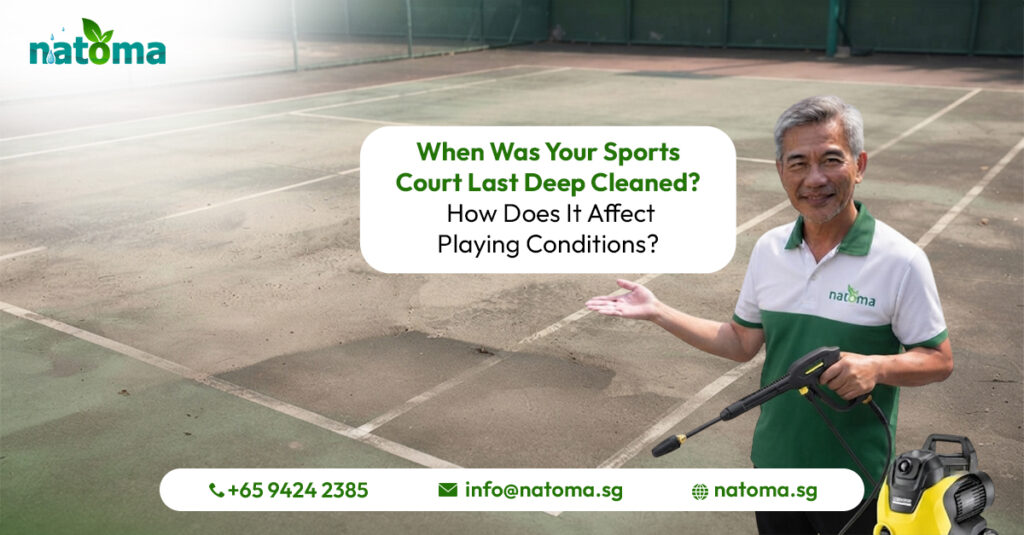
A sports court may look ready for a game, but does its surface provide the right playing conditions?
Over time, dust, loose dirt, leaves, moisture marks and other unwanted materials can collect across sports court surfaces. These issues may develop gradually, making them easy to overlook during everyday maintenance.
For tennis, padel and pickleball facilities, court cleanliness is not only about appearance. The condition of the playing surface can influence player movement, ball interaction and the overall experience of using the facility.
Regular sweeping and basic maintenance help manage everyday dirt. However, they may not address all the cleaning requirements of a heavily used sports court.
This is where Sports Court Deep Cleaning becomes important. A suitable cleaning approach helps remove accumulated dirt, maintain the playing environment and support the long-term care of sports facilities.
But how do you know when your court needs more than routine cleaning? And what difference can professional sports court cleaning make?
Let’s look at the signs, effects and practical considerations.
1. Why Does Sports Court Cleanliness Matter More Than You Think?
A sports court experiences regular movement, repeated ball contact and exposure to environmental conditions. Depending on its location, it may also collect dust, leaves, moisture and dirt from surrounding areas.
These materials do not always become noticeable immediately. However, when they accumulate, they can affect how the court looks and functions.
Consider a busy sports facility where players use the same court throughout the day. Footwear can bring dirt onto the surface, while outdoor courts receive additional debris from surrounding trees and open spaces.Without proper maintenance, these materials can build up in playing areas, corners and court edges.
Why is regular sports court cleaning important?
It helps to:
- Remove accumulated dust and loose debris.
- Maintain a cleaner playing surface.
- Address dirt in corners and less accessible areas.
- Keep surrounding walkways and court boundaries maintained.
- Support better overall facility presentation.
- Identify surface maintenance concerns during cleaning.
A clean court also creates a more welcoming environment for players, coaches and visitors.
Facility managers can explore Sports court cleaning and maintenance services to understand how planned cleaning can support different sports facilities.Importantly, cleaning alone cannot correct damaged flooring, worn coatings or structural drainage problems. These conditions may require separate maintenance or repair work.
2. What Happens to Playing Conditions When a Court Is Not Deep Cleaned?
Imagine two sports courts. Both are available for booking, and both appear suitable for playing. However, one receives regular detailed cleaning while the other only receives occasional sweeping.
Over time, the difference may become noticeable.
Accumulated dirt and debris can affect several aspects of the playing environment.
Court Surface Condition
Dust and loose particles can collect across the playing area. If left unattended, they may affect the surface condition and make the court less comfortable to use.
Player Movement
Loose debris on the playing surface may interfere with normal foot movement. Players who make quick turns, sudden stops or sideways movements need a properly maintained playing area.
Ball Interaction
Dirt and accumulated materials may affect the consistency of the playing surface. This is particularly relevant for facilities where players expect predictable ball movement and regular playing conditions.
Moisture and Drainage Concerns
Outdoor courts are exposed to rainfall and changing weather conditions. Leaves and debris around drainage areas may obstruct water flow. Standing water can affect court availability and may create additional maintenance concerns.
Overall Playing Experience
Players notice more than the condition of the court itself. Dirty boundaries, neglected corners and poorly maintained surrounding areas can affect their impression of the entire facility.
Understanding why sports court cleaning matters for players and facilities can help facility managers recognize the importance of regular maintenance.Deep cleaning helps address accumulated surface dirt, but it should be combined with appropriate inspections and maintenance to keep the facility in good condition.
3. How Can You Tell Your Sports Court Needs Deep Cleaning?
Not every court requires Deep Cleaning at the same time. The need depends on how frequently it is used, its surroundings and the type of surface.
However, certain signs suggest that routine cleaning may no longer be sufficient.
Look for these common indicators:
- Visible dirt accumulation: Dust, leaves and loose debris remain across the playing surface even after basic cleaning.
- Dirty court corners: Edges and less accessible sections show noticeable dirt buildup.
- Marks on the surface: Stains and accumulated dirt make the playing area look poorly maintained.
- Neglected surrounding areas: Walkways, boundaries and access points contain debris.
- Recurring drainage issues: Leaves and other materials collect near drainage points.
- Frequent user feedback: Players or facility managers regularly report concerns about court cleanliness.
A useful approach is to inspect the court from different positions rather than checking only the center of the playing area.
Pay attention to service entrances, fencing edges, corners, surrounding walkways and drainage locations.If these areas repeatedly collect dirt, it may be time to arrange a more detailed cleaning assessment.
4. Does Every Sports Court Need the Same Cleaning Approach?
No. Different sports courts have different surface materials, layouts and maintenance requirements. Using the same cleaning method for every court may not produce the best results.
Understanding the surface is an important part of planning effective sports court cleaning.
Tennis Courts
Tennis courts can collect dust, leaves and dirt across the playing area and surrounding boundaries. Cleaning requirements depend on whether the court has an acrylic hard surface, synthetic grass or another playing surface.
The cleaning approach should consider the surface material, visible dirt and surrounding environment.
Facilities looking for more specific maintenance information can refer to Natoma’s Tennis Court Cleaning and Maintenance Services.
Padel Courts
Padel courts have additional cleaning considerations because of their enclosed layout, glass panels, fencing and playing surface.
Dust and debris may collect around the artificial turf, glass edges and corners. Detailed cleaning should consider both the playing area and accessible surrounding structures.
For these facilities, Padel Court Cleaning and Maintenance can cover different areas of the court according to its maintenance requirements.
Pickleball Courts
Pickleball courts require attention to their playing surfaces, boundary markings and surrounding areas.
Regular maintenance helps manage dust and loose debris, while periodic detailed cleaning addresses accumulated dirt that everyday cleaning may miss.
You can also explore Natoma’s Pickleball Court Cleaning Services for information about pickleball court maintenance requirements.
Outdoor Multi-Purpose Courts
Outdoor courts experience additional exposure to rain, wind, leaves and surrounding environmental debris.
Their cleaning plans should consider the playing surface, perimeter, access pathways and drainage areas.The key consideration is simple: choose a cleaning method based on the court’s surface and actual maintenance requirements, rather than applying one standard method everywhere.
5. How Often Should a Sports Court Be Deep Cleaned?
There is no single cleaning frequency that suits every sports facility. A court used daily by multiple groups may require more attention than one used occasionally.
Instead of following an arbitrary schedule, facility managers should consider actual usage and environmental conditions.
For example, a busy padel facility may experience regular dirt accumulation because of continuous player activity. An outdoor tennis court surrounded by trees may require more frequent debris removal.
A practical maintenance arrangement can include:
- Daily or regular cleaning: Remove loose debris and attend to visible dirt.
- Scheduled detailed cleaning: Address accumulated dirt on playing surfaces, edges and surrounding areas.
- Periodic inspections: Check corners, boundaries and drainage locations for recurring maintenance concerns.
- Additional cleaning when required: Arrange cleaning after heavy usage, adverse weather or special sporting activities.
The schedule should be reviewed based on actual court conditions.
For outdoor facilities, Outdoor Sports Court Maintenance should also consider changing weather conditions, debris accumulation and drainage requirements.
Facility managers should also consider booking schedules. Planning cleaning during quieter periods can help minimize interruptions to players and regular operations.
A consistent maintenance plan is generally more effective than waiting until visible dirt becomes difficult to manage.
6. How Natoma’s Sports Court Cleaning Experience Helps Maintain Better Playing Conditions?
Maintaining a sports court requires more than removing visible dirt. It involves understanding the facility, identifying areas that need attention and selecting suitable cleaning methods.
Natoma Cleaning Service provides sports court cleaning and maintenance support for tennis, padel and pickleball facilities, alongside its wider cleaning and facility maintenance capabilities.
Its approach focuses on the actual requirements of each sports facility rather than treating every court as the same cleaning project.
How does Natoma approach sports court cleaning?
Understanding the Court and Its Requirements
Every facility has different cleaning priorities. Natoma considers the court type, surface condition, surrounding layout and usage requirements before planning the work.
This helps determine which areas need attention and what cleaning approach is suitable.
Paying Attention to More Than the Playing Surface
A sports court includes more than its central playing area. Dirt can collect around court boundaries, corners, accessible glass panels, fencing areas and surrounding walkways.
Natoma’s cleaning scope can be planned to include these areas according to the facility’s requirements.
Using Suitable Equipment and Cleaning Methods
Different surfaces require different cleaning considerations. Natoma focuses on selecting appropriate modern cleaning equipment and methods based on the surface and condition of the court.
This helps avoid treating every playing surface with an unsuitable one-size-fits-all approach.
Planning Around Facility Operations
Sports facilities often operate on fixed booking schedules. Cleaning arrangements should consider player availability, facility operations and the time required to complete the work.
Natoma can plan cleaning schedules around the facility’s requirements to help reduce unnecessary disruption.
Supporting Consistent Maintenance
A single deep cleaning session does not replace regular maintenance. Ongoing attention helps facilities manage recurring dirt accumulation and maintain their playing environments.
Natoma can support facilities with scheduled sports court cleaning and maintenance arrangements based on their needs.With experience in tennis, padel and pickleball court maintenance, Natoma aims to help sports facilities maintain cleaner playing environments and better overall facility conditions.
7. What Should Facility Managers Consider Before Arranging Court Cleaning?
Before choosing a sports court cleaning service, facility managers should understand what the job involves.
A few important considerations can make the cleaning arrangement more effective.
Start with a Site Assessment
Identify the court type, playing surface, visible dirt accumulation and surrounding areas that require attention.
Clarify the Cleaning Scope
Confirm whether the work includes only the playing surface or also accessible edges, glass panels, walkways and drainage areas.
Discuss Suitable Cleaning Methods
Ask how the cleaning approach will be selected according to the court material and existing condition.
Plan the Cleaning Schedule
Choose a suitable time that considers court bookings, player activity and facility operations.
Review the Completed Work
A supervisor or facility representative should check whether the agreed cleaning areas have been addressed and identify any remaining maintenance concerns.These considerations help facility managers make informed decisions when arranging professional sports court cleaning services.
8. Conclusion: Is Your Sports Court Ready for Its Next Game?
A well-maintained sports court supports a better playing environment. However, regular sweeping alone may not address every cleaning requirement, particularly in facilities with frequent usage and outdoor exposure.
Dust, debris and accumulated dirt can affect the appearance and condition of playing surfaces. Paying attention to these issues through planned cleaning and maintenance helps facility managers maintain their sports environments.
Whether you manage a tennis court, padel facility, pickleball court or multi-purpose sports venue, the right cleaning approach should reflect the surface, usage and maintenance requirements.
When was your sports court last deep cleaned?
If it has been a while, consider arranging a professional assessment before the next busy playing season. Natoma Cleaning Service provides customized sports court cleaning and maintenance solutions to help facilities maintain better playing conditions.
Frequently Asked Questions
Sports court deep cleaning is a detailed cleaning process that addresses accumulated dirt, dust and debris on playing surfaces and other agreed facility areas. The method depends on the court material and cleaning requirements.
The frequency depends on court usage, surface type and environmental exposure. Frequently used or outdoor courts may require more regular detailed cleaning than lightly used indoor facilities.
Loose debris, dirt and certain surface conditions may create playing concerns. Regular cleaning helps manage removable contaminants, but damaged or uneven surfaces require separate inspection and repair.
Natoma supports sports court cleaning and maintenance requirements for tennis, padel and pickleball facilities. The cleaning scope and schedule can be discussed based on the facility's requirements.